




Start typing to see results...
Find the perfect solution
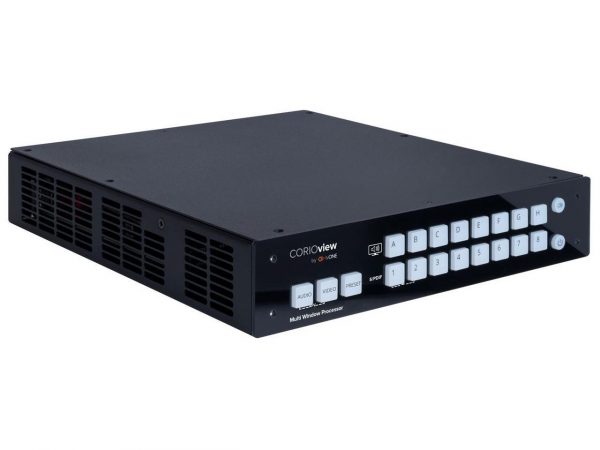
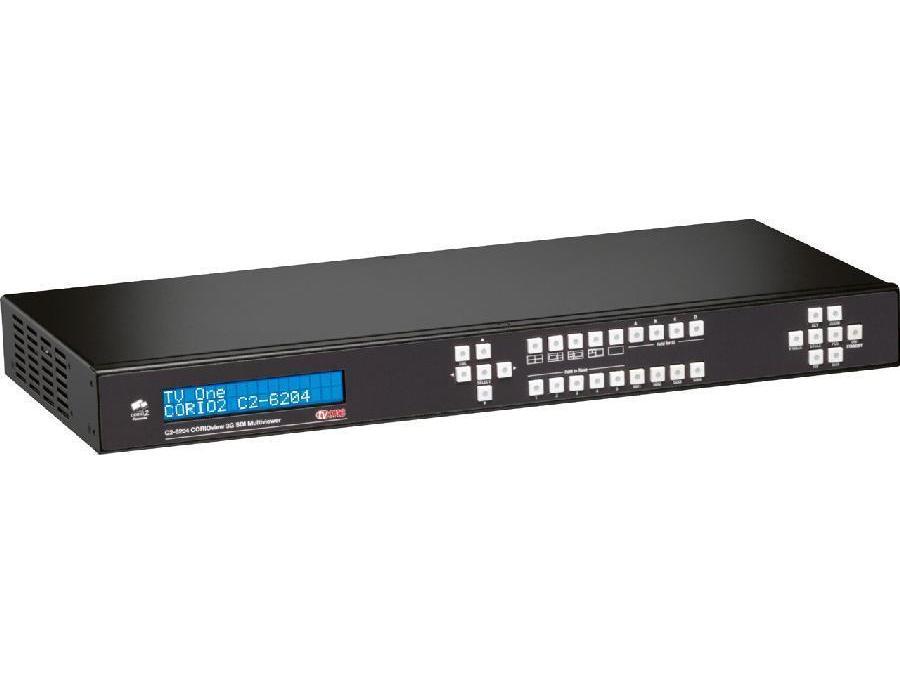
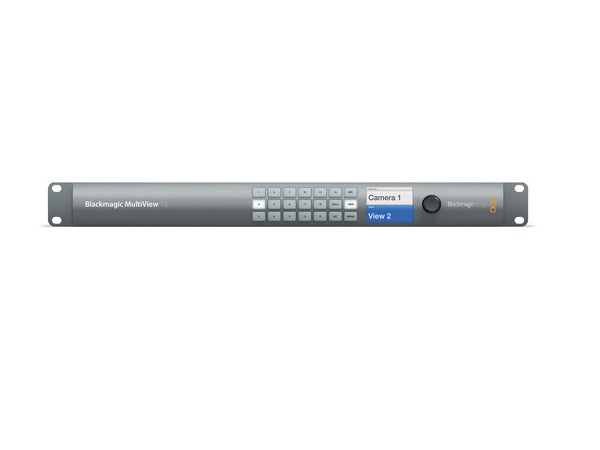
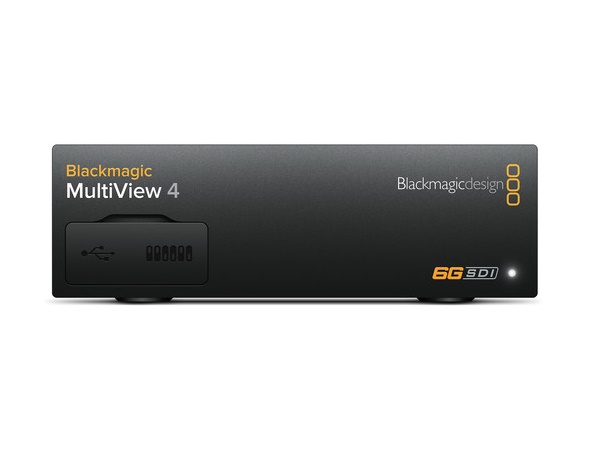
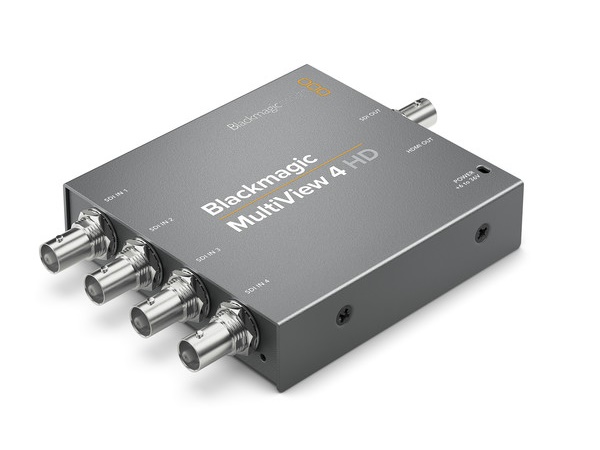
SDI multiviewers process multiple SDI source signals and combine them into one composite output, showing many SDI sources simultaneously on a single display. They are the dominant multiviewer type in broadcast facilities, live event production, and any installation where SDI is the primary source format. Broadcast control rooms in particular depend on SDI multiviewers to show every camera, graphics source, playback, plus program and preview output to the director and technical director in real time.
SDI multiviewers come in different rate capabilities. Standard models support 3G-SDI (covering SD-SDI, HD-SDI, and 3G-SDI up to 1080p60), the dominant rate in modern broadcast. Higher-rate models support 6G-SDI and 12G-SDI for 4K UHD production. Some multiviewers are rate-agile (handling multiple rates simultaneously, automatically detecting and adapting to each input), useful in mixed-rate facilities. Match the multiviewer's rate capability to the highest-rate sources in your installation; a 3G-SDI multiviewer can't handle 12G-SDI sources at full resolution.
Broadcast SDI multiviewers typically support extensive layout flexibility, matching the operational needs of professional production. Standard grids for routine monitoring (3x3 or 4x4 for typical camera counts). Primary-plus-secondary layouts for active production (program large in center, all cameras smaller around it for the director's awareness). Multi-bus layouts for facilities with multiple production switchers (separate areas of the multiview for different productions or sub-mixes). Custom mosaic layouts matching specific broadcast workflows. Quality SDI multiviewers let the operator save and recall layout presets for different operational modes.
SDI multiviewers integrate with broadcast tally systems for real-time on-air and preview indication. The multiviewer overlays colored borders on the appropriate tiles based on the production switcher's current state: red for on-air program, green for preview, yellow for sources being checked or ISO recorded, additional colors for specialty tally states. Tally is essential in live broadcast: the director sees at a glance which source is being shown to viewers and which is queued next. Tally integration typically uses GPI (General Purpose Interface) or RS-422 protocols, or modern IP-based tally systems.
SDI carries up to 16 channels of embedded audio. SDI multiviewers typically extract embedded audio for monitoring: audio level meters on each tile show audio levels for each source, audio routing lets the operator select which source's audio plays through the multiviewer's audio output (typical default: program source audio), and some multiviewers include audio waveform displays for detailed audio monitoring. Quality multiviewers handle the audio carefully: preserving level accuracy, providing per-source meters that operators can rely on, and integrating with broadcast audio infrastructure.
SDI multiviewers display source identification on each tile through Under Monitor Displays (UMD): text labels showing source names, color coding for source types, and metadata overlays. Modern systems integrate with broadcast routing protocols (Riedel SmartPanel, MIB, similar) for automatic source identification: when the production router changes which source connects to a multiviewer input, the UMD automatically updates. This eliminates the operator confusion that results when labels don't match actual sources.
SDI multiviewers in broadcast facilities integrate with broader production infrastructure. Connection to production routers (matrix switchers) routes the right sources to the multiviewer inputs. Integration with production switchers provides tally feedback. Integration with broadcast automation lets the multiviewer automatically reconfigure for different shows or production modes. Quality SDI multiviewers integrate with major broadcast production systems for seamless operation.
Broadcast SDI multiviewers typically support multiple outputs: HDMI outputs for commercial monitoring displays in the control room, SDI outputs for broadcast monitors, and sometimes specialty broadcast outputs (multi-rate SDI, fiber output for distant displays). Output resolution matches the destination display: 1080p typical, 4K UHD for high-resolution displays in premium installations. Multi-output multiviewers can drive different composite views on different displays, useful when the director and TD want different layouts.
Some SDI multiviewers include specialty broadcast features. Waveform monitoring built into the multiview (showing video waveforms alongside the picture, for technical operations monitoring). Vectorscope displays for color analysis. SCTE 35 marker indicators for digital ad insertion timing. Closed caption decoders showing decoded captions for compliance monitoring. These features are typically found in higher-end broadcast multiviewers used by network television and major broadcasters.
SDI multiviewers are essential in broadcast control rooms (the largest segment; every camera, graphics, playback, plus program and preview visible simultaneously to the director and TD), live event production (concerts, sports, theater with multi-camera production using SDI cameras and switchers, often in mobile production trucks), houses of worship with serious video production (multi-camera SDI switching for streaming and broadcast services; multiview gives the production team visibility of all sources), broadcast post-production (color grading and finishing with multiview reference monitoring), and any installation where SDI source equipment requires consolidated operator monitoring.
Match the multiviewer to the dominant source format in your installation. SDI multiviewers serve broadcast facilities and live event production where SDI is the primary source format (broadcast cameras, broadcast routers, broadcast production switchers all use SDI). HDMI multiviewers serve commercial AV where HDMI dominates (corporate AV monitoring, security with HDMI cameras, conferencing operations). For mixed-format installations, multi-format multiviewers accept both SDI and HDMI inputs in one chassis, or separate multiviewers handle each format type.
Tally is a visual indicator showing which sources are currently on-air (program), on preview, or in other operational states. The multiviewer overlays colored borders on the appropriate tiles based on the production switcher's current state: red for on-air, green for preview, yellow for special states. Tally integrates with the production switcher through GPI (General Purpose Interface) or RS-422 protocols, or modern IP-based tally systems. When the director cuts to camera 3, the multiviewer immediately shows the red tally on camera 3's tile. For live broadcast, tally is essential operational feedback for the director and TD.
UMD stands for Under Monitor Display: the text label that appears on each multiview tile identifying the source. Modern UMD systems integrate with broadcast routing protocols (Riedel SmartPanel, MIB, similar), so when the production router changes which source connects to a multiviewer input, the UMD automatically updates to show the correct source name. This eliminates the operator confusion that results when labels don't match actual sources. For routing-flexible broadcast facilities where sources can connect to different multiviewer inputs based on show requirements, automatic UMD updates are essential.
Commercial SDI multiviewers range from 4-input (2x2 grid) to 64+ input (8x8 or larger layouts) for enterprise broadcast. Most broadcast control rooms use 16 to 32 input multiviewers, matching the typical camera and source count. Mobile production trucks may use smaller multiviewers (8 to 16 input) matching their camera complement. Large network broadcast facilities use 64+ input multiviewers for studio production with many cameras and sources. Always size with margin: a multiviewer with 32 inputs serving 24 current sources allows expansion as productions grow more complex.
A rate-agile SDI multiviewer automatically handles multiple SDI rates simultaneously: SD-SDI, HD-SDI, 3G-SDI, 6G-SDI, and 12G-SDI inputs can route to the multiviewer in any combination, with the multiviewer handling rate compatibility internally. This is essential in modern broadcast facilities that handle multiple SDI rates simultaneously: SD for legacy feeds, HD for current production, 3G for 1080p60 production, 12G for 4K work. Rate-agile multiviewers significantly simplify operations compared to dedicated single-rate multiviewers.
Broadcast control rooms (the largest single use; the director and technical director see every camera, graphics source, playback, plus program and preview output simultaneously on multiview displays during live productions; this is the foundational tool of live broadcast direction), live event production (concerts, sports, theater, corporate events with multi-camera SDI production; often in mobile production trucks and rental and staging companies where the multiviewer is part of the production package), houses of worship with serious video production (multi-camera SDI switching for streaming and broadcast services; multiview gives the production team visibility of all sources during services), broadcast post-production (color grading and finishing with multiview reference monitoring), and any installation where SDI source equipment requires consolidated operator monitoring.

On order over $300 and more for US and US territory

We Offer a 30-Day Money Back Guarantee

Full manufacturer's warranty and quality assurance

Safe checkout with trusted payment providers