




Start typing to see results...
Find the perfect solution
Although Avprosupply has the legal right to set our own prices, some manufacturers place restrictions on how those prices may be advertised. This is why you may sometimes see requests like “add to cart for price”, “click here for price”, or “call for price”.
Specific actions required may vary based on the manufacturer's minimum advertised price policy. We'd love to show you our lowest price, quite simply, at the earliest possible time while shopping, but in these circumstances the manufacturers don't allow it. We realize this is an inconvenience and apologize. By ensuring we follow manufacturer advertising guidelines, Avprosupply is able to offer the very best pricing and value to our customers.
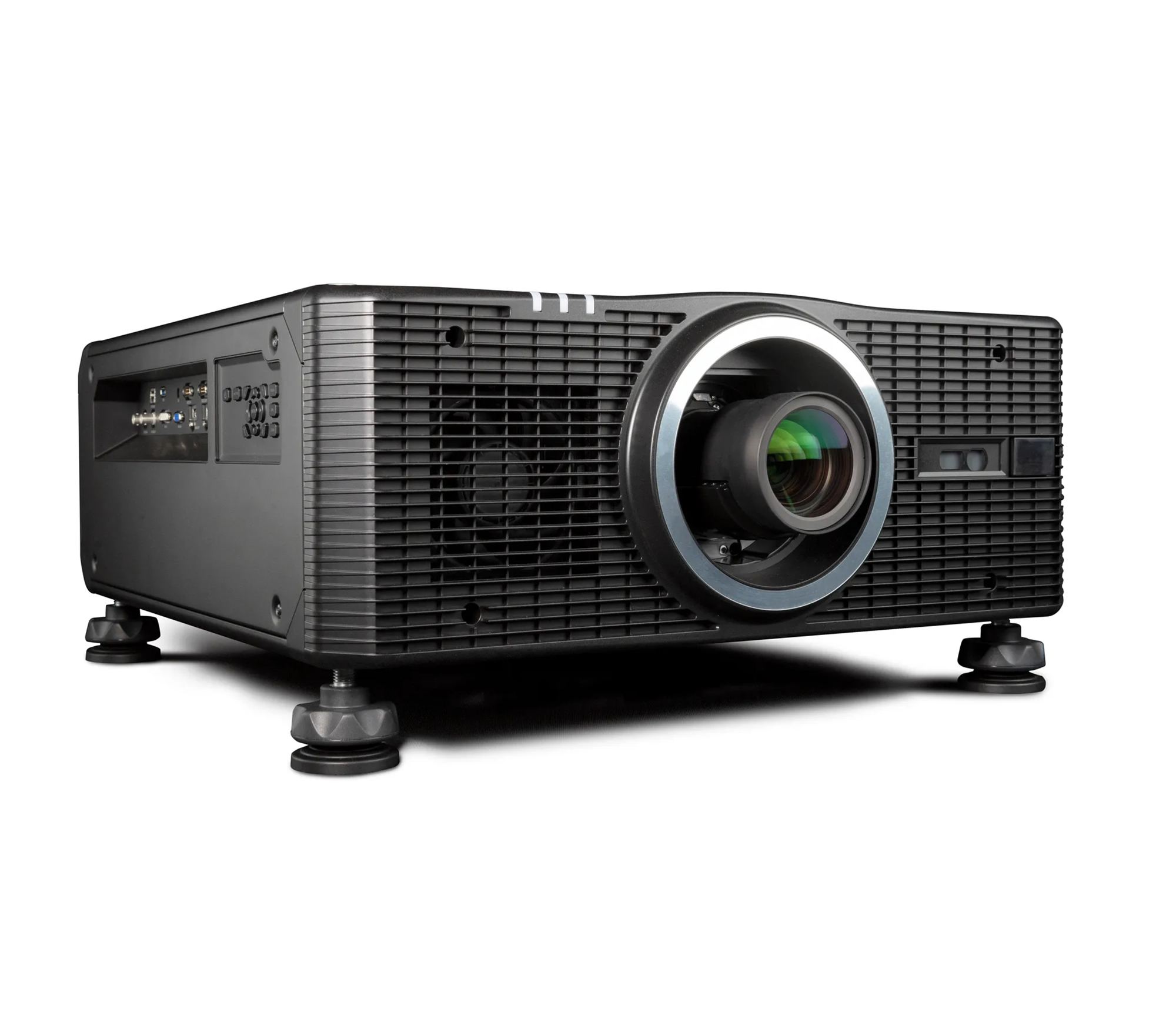
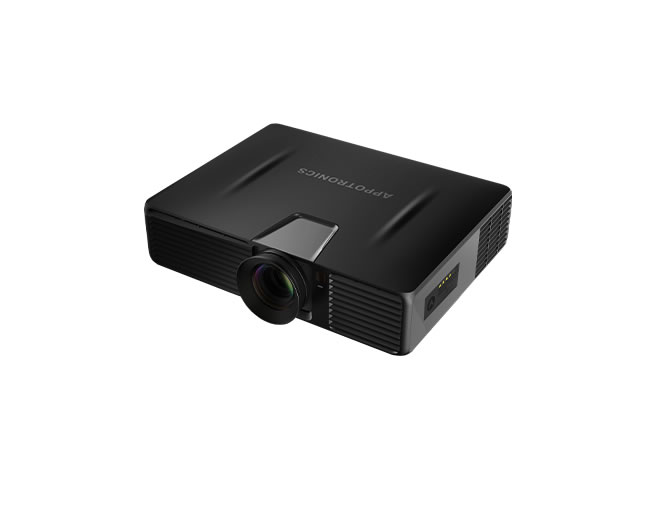
Projectors throw an image onto a separate screen or wall surface rather than displaying it on a self-contained panel like a TV. They are the right choice when the display image must be very large (over 100 inches diagonal, beyond practical flat-panel sizes), when the room layout or aesthetic doesn't accommodate a large flat panel, when the budget favors a single projector plus screen over an equivalent-size flat panel, or when the application specifically benefits from projection (classroom layouts, large venues, theater, immersive installations).
Several technologies dominate the commercial projector market. DLP (Digital Light Processing) uses a chip with millions of tiny mirrors and a spinning color wheel, producing sharp images with excellent contrast and longevity; the dominant technology in commercial AV. LCD (Liquid Crystal Display) uses three LCD panels and a prism to combine red, green, and blue light, producing bright vivid images popular in classrooms and conference rooms. LCoS (Liquid Crystal on Silicon) combines LCD and DLP principles, used in high-end home theater and specialty applications. Laser-illuminated projectors use lasers as the light source rather than traditional lamps, providing longer lifespans (20,000+ hours), instant on/off, and consistent brightness over the projector's life.
Projector brightness is rated in ANSI lumens (the industry standard measurement). Match brightness to the room and ambient light: 2000 to 3000 ANSI lumens for small to medium conference rooms with controlled lighting, 3000 to 5000 lumens for typical classrooms with some ambient light, 5000 to 8000 lumens for large lecture halls or rooms with significant ambient light, 8000+ lumens for large venues, churches, and rooms with strong ambient light. Higher brightness costs more; size correctly for the application without overspending on unneeded brightness.
Modern projectors come in various native resolutions. XGA (1024x768) is legacy and largely obsolete for new installations. WXGA (1280x800) and WUXGA (1920x1200) serve education and corporate. 1080p (1920x1080) is consumer-format HD. 4K UHD (3840x2160) is standard for premium home theater and increasingly for corporate and education. Some specialty projectors support higher resolutions (4K DCI, 8K) for cinema and high-end installations. Match resolution to the source content and viewer distance: 4K is overkill for typical conference rooms but appropriate for premium home theater and large venues.
Projectors come in different throw distance categories. Long-throw projectors mount far from the screen (the traditional configuration, with the projector at the back of the room or ceiling-mounted). Short-throw projectors mount close to the screen (typically 3 to 8 feet), useful for interactive whiteboards and rooms where back-mount space isn't available. Ultra-short-throw (UST) projectors mount within inches of the screen, ideal for cabinet-mounted home theater installations and classroom front-mounted setups. The throw ratio (distance to screen divided by image width) determines mounting flexibility.
Traditional projectors use replaceable lamps as the light source, lasting 2,000 to 5,000 hours depending on usage and mode. Lamp replacement is a recurring maintenance cost. Laser-illuminated projectors use lasers (or LED with laser phosphor in some designs), lasting 20,000+ hours with no lamp replacement. Laser projectors cost significantly more initially but eliminate lamp maintenance and provide consistent brightness over their lifespan. For installations with high usage (signage, education, houses of worship with frequent services), laser projectors usually justify their cost through eliminated lamp purchases and reduced maintenance.
Quality projectors include lens shift (the ability to physically move the projected image without tilting the projector) and keystone correction (digital correction for images projected at an angle). Lens shift maintains image quality while allowing flexible mounting; keystone correction works for any installation but slightly reduces image quality. For premium installations, look for lens shift over keystone correction; for budget installations, keystone is acceptable.
Modern commercial projectors include network connectivity for centralized management and content delivery: Ethernet ports for control system integration, IP-based status monitoring, scheduled power-on/off, remote diagnostics, and integration with AV-over-IP installations. RS-232 control remains common for legacy control system integration. Quality projectors support multiple control protocols simultaneously.
Projectors serve classrooms and lecture halls (the largest commercial segment; one projector per classroom feeding course content to students), conference rooms and boardrooms (mid-size to large rooms with projector plus screen as the primary display), houses of worship (sanctuaries with projection for lyrics, sermon graphics, and video), large venues (stadiums, arenas, large event spaces with high-brightness projection), home theaters (residential premium installations with projection for cinematic image size), digital signage in specific applications (large-format outdoor signage, theater lobbies), and any installation requiring image sizes beyond practical flat-panel display dimensions.
Choose a projector when the image must be very large (over about 100 inches diagonal, the practical limit for flat panels), when the budget favors a single projector plus screen over equivalent flat-panel sizes (projectors are typically less expensive per square inch at large sizes), when the room can be darkened or has controlled lighting, and when the application specifically benefits from projection (classroom layouts with the instructor at the front and projector behind, theater, immersive installations). Choose flat-panel displays when image size is moderate (under 100 inches), when ambient light is high and cannot be controlled, when image quality must be perfect regardless of room conditions, and when ongoing maintenance (lamp replacement) is unwelcome.
Match projector brightness to room size and ambient light. Small conference rooms with dimmed lighting: 2000 to 3000 ANSI lumens. Typical classrooms with some ambient light: 3000 to 5000 lumens. Large lecture halls or rooms with significant ambient light: 5000 to 8000 lumens. Large venues, churches, and rooms with strong ambient light: 8000+ lumens. Higher brightness costs more but provides margin for varying conditions. For installations where the room can't be darkened (windows that can't be covered, lighting that must stay on), step up by one bracket from the typical range. Always specify slightly more brightness than the minimum needed.
Choose laser projectors for high-usage installations (signage running daily, classrooms used 6+ hours daily, houses of worship with frequent services): the higher initial cost is recovered through eliminated lamp replacement costs and reduced maintenance. Laser lifespans of 20,000+ hours mean a typical commercial installation may never need a "lamp" replacement during the projector's useful life. Choose lamp projectors for low-usage installations (occasional boardroom presentations, infrequent event projection, residential): the lower initial cost makes sense when total operating hours are modest and lamp replacement is rare.
Short-throw projectors mount close to the screen (typically 3 to 8 feet for a 100-inch image), useful in rooms where back-mount space isn't available, in interactive whiteboard installations (where the presenter standing at the screen wouldn't block a long-throw projector), and in classroom front-mount setups. Ultra-short-throw (UST) projectors mount within inches of the screen (literally a few inches in some products), ideal for cabinet-mounted home theater installations and any application where the projector must be very close to the screen. Both eliminate problems with presenter shadow and back-of-room mounting requirements.
The answer depends on projector brightness and screen technology. With proper brightness (5000+ lumens for moderate ambient light, 8000+ lumens for high ambient light), modern projectors work in many ambient-light situations. Specialty ambient-light-rejecting (ALR) screens significantly improve image quality in lit rooms by rejecting light from off-axis directions while showing the projector's on-axis light. For installations where ambient light cannot be controlled, the projector and screen combination matter more than just brightness alone. For installations with strong ambient light (large windows, bright commercial lighting), consider whether a flat-panel display might serve better than even a high-brightness projector.
Classrooms and lecture halls (the largest commercial segment; one projector per classroom feeding course content from instructor PC, document camera, BYOD inputs to students), conference rooms and boardrooms (mid-size to large rooms with projector plus screen as the primary display when image sizes need to exceed flat-panel dimensions), houses of worship (sanctuaries with projection for lyrics, sermon graphics, sermon notes, and video; usually with high-brightness models for visibility despite stage lighting), large venues (stadiums, arenas, large event spaces with high-brightness laser projection), home theaters (residential premium installations with projection for true cinematic image size), digital signage in specific applications (large-format outdoor signage with weather-rated projection, theater lobbies and entertainment venues), and any installation requiring image sizes beyond practical flat-panel display dimensions.

On order over $300 and more for US and US territory

We Offer a 30-Day Money Back Guarantee

Full manufacturer's warranty and quality assurance

Safe checkout with trusted payment providers