




Start typing to see results...
Find the perfect solution
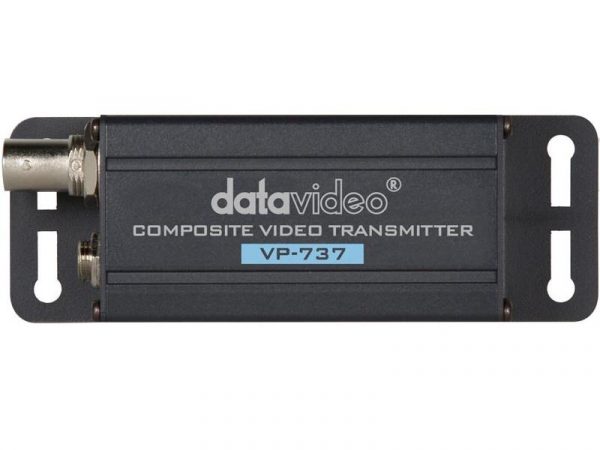
Composite and S-Video extenders carry these analog video signals over long distances, much further than standard analog cables can reliably reach. Composite video on RCA or BNC is electrically robust and tolerant of long runs (100+ meters on quality 75-ohm coax), but S-Video on mini-DIN is more sensitive to cable length, typically limited to 15 meters before signal degradation. When the installation needs longer distances or cable infrastructure that doesn't match the source equipment, composite and S-Video extenders bridge the gap.
Composite and S-Video are legacy analog video formats, but they remain in significant use in security and CCTV (analog cameras and recorders), retro gaming installations, hospitality TV systems with legacy infrastructure, broadcast monitoring of SD program feeds, museum AV exhibits, and training facilities with VHS and DVD source material. When these installations need to bridge longer distances or to use available cable infrastructure (CAT cable or fiber) rather than coax, extenders provide the solution.
Composite and S-Video extenders use several extension methods. CAT cable extenders carry the analog signal over standard twisted-pair network cable, typically up to 1000 feet at composite resolution. Fiber optic extenders cover longer distances (kilometers) with full immunity to electrical interference. Coaxial extenders take an existing composite signal on coax and amplify/regenerate it for very long runs (composite is already electrically robust on coax, so this matters mainly for security CCTV runs of hundreds of feet). The choice depends on the available cable infrastructure and the required distance.
The largest single use of composite extenders is security CCTV: many analog cameras connecting back to a central recording and monitoring location. CAT cable extenders for composite are common in older security installations, with one cable carrying multiple channels (often 4, 8, or 16) of composite video plus audio and control. As security migrates to IP cameras, these extenders are gradually being replaced, but the installed base remains large.
Analog signal extension is more demanding than digital extension because every component along the path (cable, connectors, extender transmitter, extender receiver) adds noise and degrades the signal. Quality extenders use careful analog circuit design, proper impedance matching, and good shielding to minimize degradation. Budget extenders often produce visibly softer or noisier output. For installations where picture quality matters (broadcast monitoring, museum exhibits, retro gaming), buy quality extenders from established manufacturers.
Neither composite nor S-Video carries audio on its main connector. Composite typically pairs with stereo RCA audio cables; S-Video pairs with the same. Most composite and S-Video extenders include separate audio channels alongside the video, carrying the matching audio over the same CAT cable or fiber so video and audio reach the destination together. Some specialty extenders for broadcast applications carry balanced XLR audio for pro audio paths.
Composite and S-Video extenders are used in security and CCTV (analog cameras to recorders over long cable runs), retro gaming installations (preserving the look on remote period displays), legacy hospitality TV (long runs from headend to room TVs), broadcast monitoring (older equipment driving distant monitor walls), museum AV exhibits (period equipment driving displays at exhibit locations), training facilities (VHS and DVD source material to remote classroom displays), and any installation where composite or S-Video equipment needs to bridge greater distances than direct cables can support.
Composite is electrically robust on 75-ohm coax (up to 100 meters or more without extension), but S-Video is more sensitive (typically limited to about 15 meters). Even composite needs extension when the cable infrastructure doesn't match: an installation with CAT cable already pulled to many camera locations but no coax, an installation where the existing 75-ohm coax is far older than 100 meters, or an installation needing to bridge cross-building distances or use fiber. Extenders adapt the signal to available cable infrastructure and longer distances.
Standard composite on 75-ohm coax (RG-6 or RG-59) works directly without extension up to 100 meters or more. CAT cable extenders carry composite (and audio) over CAT5e or CAT6 cable, useful in installations where CAT is already pulled but coax is not. CAT extension typically supports 300 meters or more at composite resolution. Coaxial signal extension is rare because coax already handles long composite runs; specialty signal regenerators exist for very long runs (over 200 meters) where signal level matters.
Composite mixes brightness and color onto one wire; S-Video keeps them separate, giving a sharper picture at the same resolution. Composite is electrically robust over long cables; S-Video is more sensitive to distance and cable quality. For extension purposes, both formats are still SD resolution (about 480 lines), and both extenders carry audio separately. Composite extenders are more common because composite itself is more common; S-Video extenders serve specific legacy applications (older camcorders, broadcast monitoring, retro gaming with S-Video sources).
Yes, most quality extenders carry stereo audio alongside the video, on the same CAT cable, fiber, or coax. The extender's transmitter accepts separate audio inputs (typically RCA or XLR depending on the model), and the receiver provides matching outputs so video and audio reach the destination together and stay synchronized. Some specialty extenders carry digital audio (SPDIF) or multi-channel balanced audio for broadcast applications. Always verify audio handling when choosing an extender.
Some do, especially those designed for integrating legacy composite into modern HD AV systems. The extender may include a built-in scaler that takes the 480i composite input, de-interlaces it, removes noise, and outputs upscaled HD or 4K on HDMI at the receiver end. Quality scaling significantly improves the look of SD content on modern displays. Budget extenders typically don't include scaling; the destination display does any necessary upscaling internally. For installations bridging composite sources to modern HD/4K displays, extenders with built-in scaling are worth specifying.
Security and CCTV (the largest single use; analog cameras connecting back to central recording and monitoring over long cable runs, often with multi-channel extenders carrying many cameras at once), retro gaming installations (preserving original consoles on remote period CRT displays), legacy hospitality TV (long runs from headend equipment to room TVs in older hotels), broadcast monitoring (older SD program feeds driving distant monitor walls in control rooms), museum AV exhibits (period equipment driving displays at remote exhibit locations), training facilities (VHS and DVD source material distributed to remote classroom displays), and any installation where composite or S-Video equipment needs to bridge greater distances.

On order over $300 and more for US and US territory

We Offer a 30-Day Money Back Guarantee

Full manufacturer's warranty and quality assurance

Safe checkout with trusted payment providers