




Start typing to see results...
Find the perfect solution
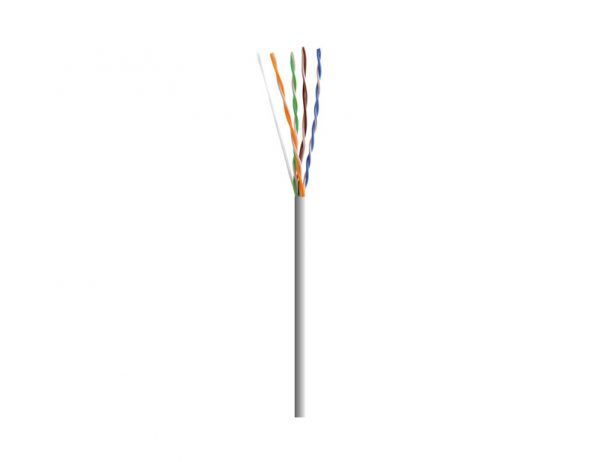
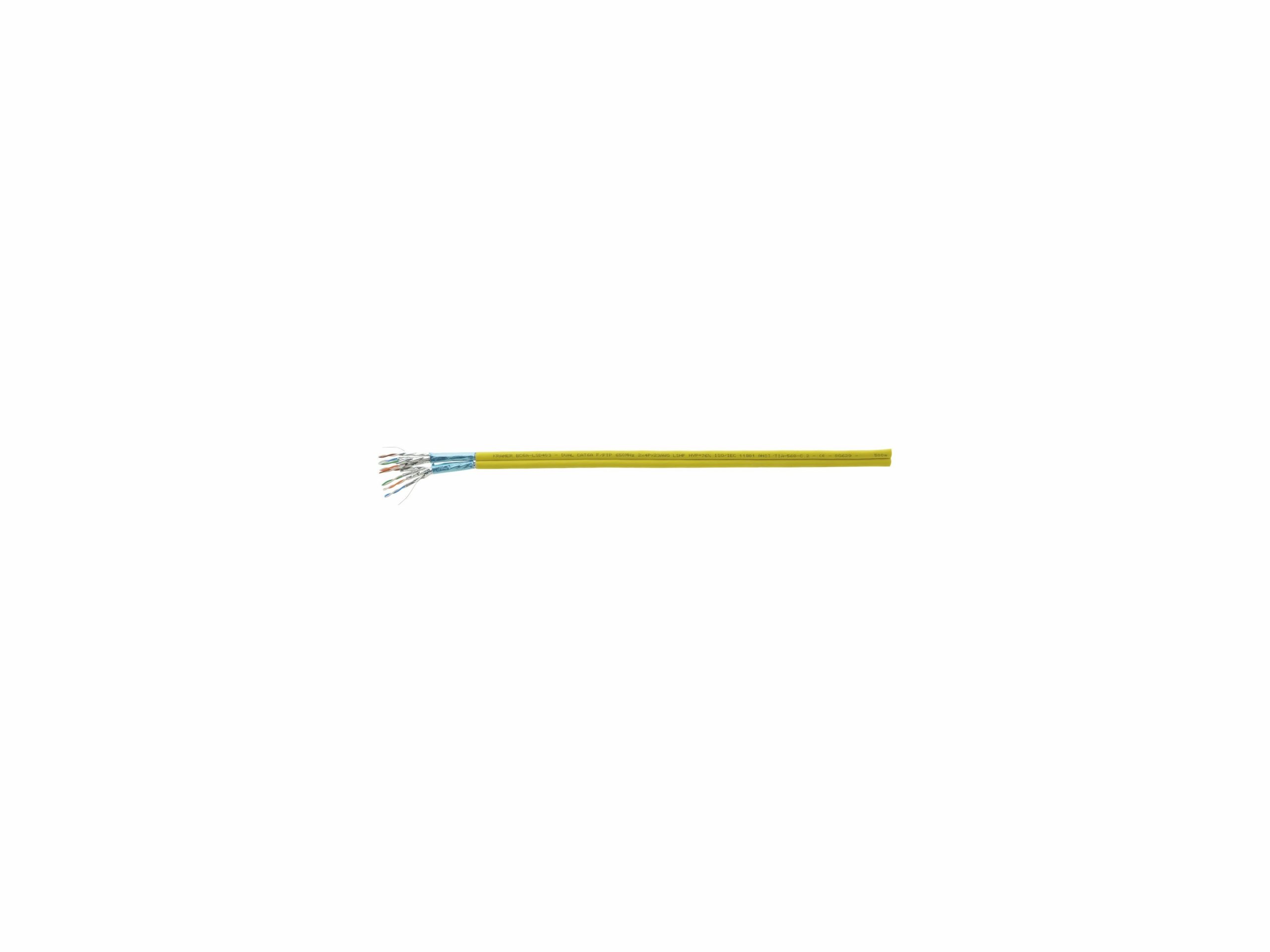
CAT5 and CAT5e are twisted-pair network cables that carry Ethernet, AV-over-IP, HDBaseT, PoE, and other digital signals up to 100 meters (328 feet). CAT5 supports 10/100 Mbps (Fast Ethernet) at frequencies up to 100 MHz. CAT5e (enhanced CAT5) supports Gigabit Ethernet (1 Gbps) with reduced crosstalk between pairs, making it the most widely deployed network cable in commercial and residential installations.
CAT5 and CAT5e use the same connectors (RJ45) and look physically similar, but CAT5e has tighter twist rates and better-controlled construction to reduce crosstalk between the four pairs. This makes CAT5e suitable for Gigabit Ethernet, while CAT5 is limited to 100 Mbps Fast Ethernet. CAT5 is rapidly becoming obsolete; CAT5e remains the entry-level network cable in many installations because of its low cost and broad compatibility.
CAT5e officially supports 1000BASE-T (1 Gbps) over 100 meters. Some CAT5e cable can carry 10 Gigabit Ethernet (10 Gbps) over short runs (up to 45 meters or so) with care, but this is not guaranteed by the standard. For reliable 10 GbE, step up to CAT6 or CAT6a. CAT5e also supports power-over-Ethernet (PoE) up to 60 watts (PoE+ Type 2) and many AV-over-IP and HDBaseT applications.
For applications that need only Gigabit Ethernet (most office networks, basic AV-over-IP, HDBaseT class B), CAT5e is sufficient and saves money on bulk cable runs. For installations with thousands of cable drops where the cost difference between CAT5e and CAT6 adds up, CAT5e remains common. For temporary or rental installations where future-proofing is not a concern, CAT5e patch cables are cheap and reliable.
CAT5e cable comes in the same jacket ratings as CAT6: CMR (riser, the standard for general use), CMP (plenum, required for return-air spaces in commercial buildings), and outdoor/direct-burial variants. Always specify the right jacket for the installation. Local building and fire codes determine which rating is mandatory.
CAT5e cables connect networked equipment in homes, small offices, and commercial AV installations: routers and switches, computers, IP cameras, wireless access points, AV-over-IP encoders and decoders (entry-level), HDBaseT extenders (lower-bandwidth variants), and PoE-powered devices. CAT5 is increasingly limited to legacy installations and is being phased out in favor of CAT5e and CAT6.
CAT5 and CAT5e use the same connector (RJ45) and look similar, but CAT5e has tighter twist rates and improved construction to reduce crosstalk between pairs. CAT5 supports 10/100 Mbps Fast Ethernet up to 100 MHz; CAT5e supports Gigabit Ethernet (1 Gbps) at the same 100 MHz frequency. The upgrade from CAT5 to CAT5e was driven by the demand for Gigabit Ethernet over the existing twisted-pair infrastructure. CAT5 is essentially obsolete; CAT5e is the modern minimum for any new installation.
Officially no, but in practice often yes for short runs. CAT5e is rated for 1 Gigabit Ethernet at 100 MHz over 100 meters. Some CAT5e cable can carry 10 GbE over short runs (typically up to 45 meters) when the cable, terminations, and environment are favorable, but this is not guaranteed by the standard and may not pass certification. For reliable, code-compliant 10 GbE, use CAT6 (good to 55 meters) or CAT6a (good to 100 meters). For new 10 GbE infrastructure, plan on CAT6a from the start.
Yes, for applications that need only Gigabit Ethernet and basic PoE. CAT5e remains the most widely deployed network cable because it is inexpensive, broadly compatible, and sufficient for the vast majority of commercial and residential needs. For new installations that may need 10 GbE in the future, or for high-bandwidth AV-over-IP, step up to CAT6 or CAT6a. The cost difference between CAT5e and CAT6 in bulk cable is small enough that most professional installers choose CAT6 as the new minimum.
The maximum length for Ethernet (Gigabit or slower) on CAT5e is 100 meters (328 feet), including patch cables on each end. For 10 GbE on CAT5e (when supported), the limit is shorter (typically about 45 meters or less). For longer runs, use fiber optic cable, an Ethernet repeater or switch in the middle, or technology specific to the signal type. The 100-meter limit applies to the total cable path, not just one segment.
Yes, for most PoE applications. CAT5e supports IEEE 802.3af (PoE, 15.4W per port at the source) and IEEE 802.3at (PoE+ Type 2, 30W per port at the source). The higher-power PoE++ (Type 3 and Type 4, up to 90W) standards officially require CAT6 or better because of the higher currents involved and the heat dissipation needs, though CAT5e often works for Type 3 (60W) at shorter distances. For modern PoE-powered AV devices (cameras, displays, speakers), CAT5e is sufficient for typical low- and mid-power applications.
CAT5e is the standard cable for networked AV devices: AV-over-IP encoders and decoders (entry-level), IP cameras (most current models use PoE over CAT5e), networked audio (Dante, AES67) for moderate channel counts, HDBaseT extenders for HDMI distribution over CAT5e (class B HDBaseT supports 1080p at 70 meters on CAT5e), control system processors and touch panels, and general network infrastructure in AV equipment racks. CAT5 cable is increasingly limited to legacy installations and is rapidly being phased out.

On order over $300 and more for US and US territory

We Offer a 30-Day Money Back Guarantee

Full manufacturer's warranty and quality assurance

Safe checkout with trusted payment providers