Start typing to see results...
Find the perfect solution
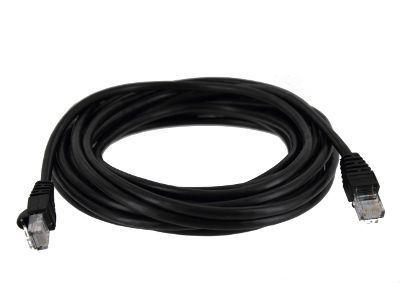
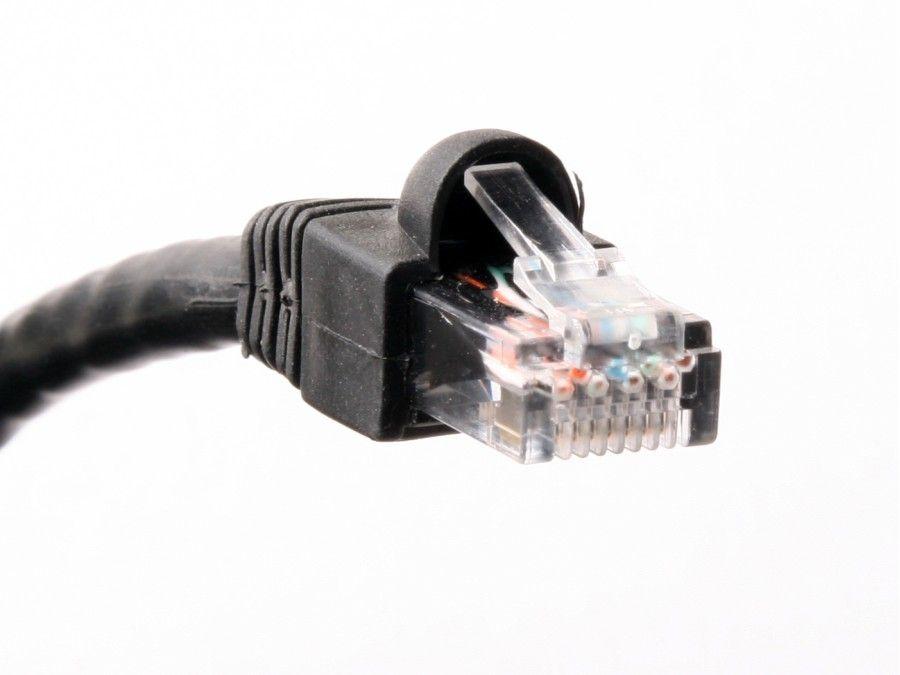
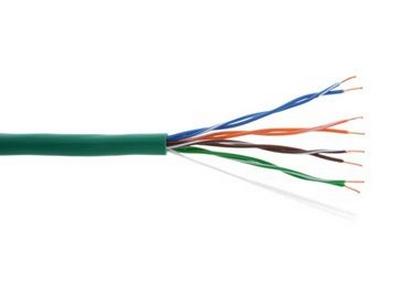
CAT5 and CAT6 cables are twisted-pair network cables that carry Ethernet, AV-over-IP, HDBaseT, PoE, telephone, and many other digital signals over short to medium distances. They are the foundation of modern AV and IT installations: every networked device in a building, from network switches to AV-over-IP encoders to wireless access points, connects via some category of twisted-pair cable. The cable consists of four twisted pairs of copper conductors (8 conductors total) terminated with RJ45 connectors.
The categories represent progressively better cable performance. CAT5 supports 10/100 Mbps Ethernet at up to 100 MHz, and is nearing the end of its useful life. CAT5e (enhanced) is the most widely deployed cable: it supports Gigabit Ethernet (1 Gbps) at 100 MHz, with reduced crosstalk between pairs. CAT6 supports 10 Gigabit Ethernet (10 Gbps) at up to 250 MHz over short distances (up to about 55 meters). CAT6a (augmented) supports 10 Gbps at 500 MHz for full 100-meter runs. CAT7 is the most premium category, supporting 10 Gbps at 600 MHz with even better shielding and crosstalk performance, but it requires special connectors not used in standard Ethernet.
The standard maximum length for any category of twisted-pair Ethernet is 100 meters (328 feet). Beyond that, signal integrity drops and Ethernet errors increase. For longer runs, use fiber optic cable, AV-over-IP repeaters, or other extension technology. Within the 100-meter limit, the cable supports its rated speed reliably; near the limit, lower categories may drop to slower speeds while higher categories maintain rated speed.
CAT5e and CAT6 come in unshielded (UTP, Unshielded Twisted Pair) and shielded (STP, Shielded Twisted Pair) variants. UTP is the standard for most installations; the twisted pairs themselves cancel out enough interference for normal use. STP adds foil or braided shielding to reject electrical noise, useful in environments with high electromagnetic interference (near power cables, motors, fluorescent lights) or for very high-speed (10 Gbps) installations.
Twisted-pair cable comes in several jacket ratings dictated by where it is installed. CMR (riser-rated) is the standard for vertical runs between floors and most general installations. CMP (plenum-rated) is required for return-air spaces above suspended ceilings in commercial buildings, with a jacket that produces minimal toxic smoke when burned. Direct-burial cable is rated for outdoor underground runs. Outdoor cable is rated for above-ground outdoor use. Always specify the right jacket for the installation location.
CAT5e and CAT6 cables connect every networked device in modern AV installations: AV-over-IP encoders and decoders, HDBaseT extenders, PoE-powered devices (cameras, access points, displays), control system processors, audio-over-IP devices (Dante, AES67), and standard network infrastructure. They are the most common cable type in commercial AV today, far outnumbering HDMI runs in most modern installations.
The categories represent progressively better cable performance. CAT5 supports 10/100 Mbps Ethernet at 100 MHz and is nearing the end of its useful life. CAT5e (enhanced) is the most widely deployed cable and supports Gigabit Ethernet (1 Gbps) at 100 MHz, with reduced crosstalk between pairs. CAT6 supports 10 Gbps at 250 MHz for short distances (up to 55 meters). CAT6a supports 10 Gbps at 500 MHz for full 100-meter runs. CAT7 supports 10 Gbps at 600 MHz with even better shielding, but uses non-standard connectors. For new commercial installations, CAT6 is the typical minimum, with CAT6a for 10 GbE infrastructure.
CAT6 is the typical minimum for new commercial AV installations, supporting Gigabit Ethernet, PoE, HDBaseT, and most AV-over-IP applications reliably. CAT6a is the right choice for 10 Gigabit Ethernet infrastructure and for future-proofing high-bandwidth AV-over-IP networks. CAT5e is still acceptable for budget-constrained installations that need only Gigabit Ethernet, but the small additional cost of CAT6 is usually worth it for future-proofing. For specialized environments with high electromagnetic interference, consider shielded (STP) cable in the appropriate category.
The standard maximum is 100 meters (328 feet) for any category of twisted-pair Ethernet, including patch cables on each end. Beyond 100 meters, signal integrity drops and Ethernet errors increase to unacceptable levels. For longer runs, use fiber optic cable (single-mode for very long distances, multimode for moderate distances within a building), an Ethernet repeater or switch in the middle of the run, or extension technology specific to the signal type (such as fiber-based HDBaseT extenders).
Unshielded twisted-pair (UTP) is the standard for most installations: the twisted pairs themselves cancel out enough interference for normal use, and the cable is cheaper and easier to terminate. Shielded twisted-pair (STP) is the right choice for environments with high electromagnetic interference (near power cables, motors, fluorescent lights, dimmers), for full-length 10 Gigabit Ethernet runs (where the higher frequencies are more susceptible to interference), or in industrial and medical environments where reliability and noise rejection matter more than cost.
Plenum cable (CMP-rated for communications) has a jacket made of materials that produce minimal toxic smoke when burned, making it safe for installation in return-air plenum spaces in commercial buildings. Plenum spaces are the ceiling cavities above suspended ceilings that carry forced HVAC return air; smoke that enters these spaces during a fire spreads through the building, so plenum cable is required by building and fire codes for any cable installed in these areas. Riser cable (CMR-rated) is required for vertical runs between floors, with less stringent fire requirements than plenum.
Networked AV devices (AV-over-IP encoders and decoders, IP cameras, networked audio devices using Dante or AES67, IP-controlled displays and projectors), HDBaseT extenders (which carry HDMI signals over 100 meters on a single CAT6 cable), PoE-powered devices (security cameras, wireless access points, IP phones, some AV displays, network speakers), control system processors and touch panels, and general networking infrastructure (switches, routers, servers). In most modern AV installations, CAT cable far outnumbers HDMI runs, because everything talks IP first and HDMI second.

On order over $300 and more for US and US territory

We Offer a 30-Day Money Back Guarantee

Full manufacturer's warranty and quality assurance

Safe checkout with trusted payment providers