Start typing to see results...
Find the perfect solution
VGA switchers are designed for routing computer-video signals to monitors or high-definition displays. Although VGA seems dated compared to HDMI or DVI, it is still used widely in multimedia meeting rooms, big screen displays, schools, training facilities, and other similar applications. Many high-performance VGA switchers are still in production for cross-switching multiple computers and audio signals in environments where VGA infrastructure remains in service.
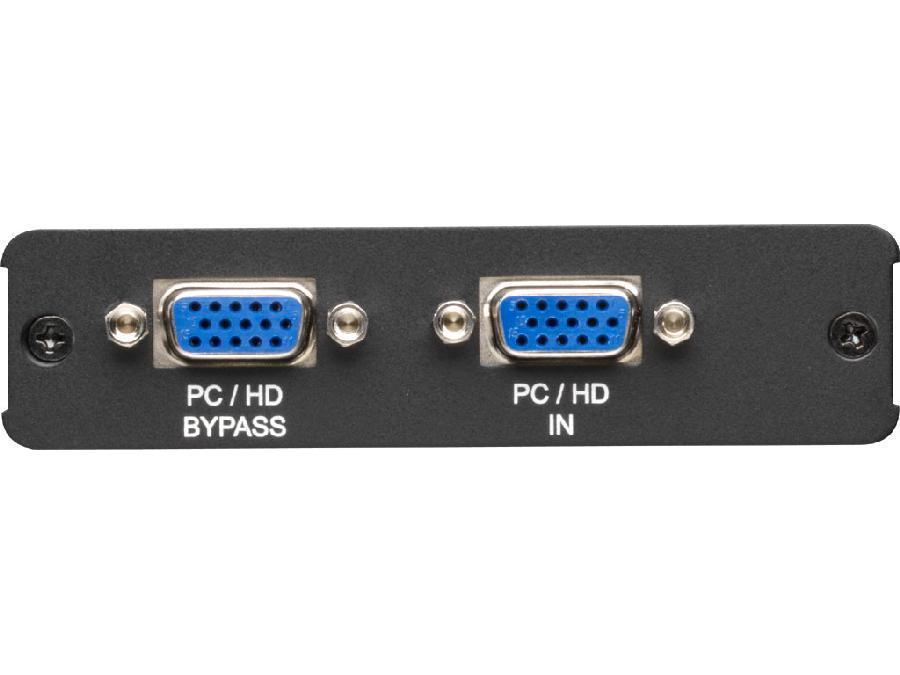
VGA switchers use the 15-pin VGA D-Sub connector for video signal input and output. They can easily be rack-mounted, with many models including rack mount ears. The 15-pin connector has thumbscrews on the cable side that screw into matching standoffs on the device, keeping the cable securely connected even under vibration. This reliability is part of why VGA remains popular in education and industrial environments where stability matters.
Many modern VGA switchers have multiple control interfaces. Front panel controls (buttons and indicators on the switcher itself for manual operation), IR remote controllers (handheld remotes for room-based control), RS-232 serial control (for integration with control systems and automated operation), and Ethernet/IP control (network commands from control systems, web interfaces, or apps). Quality switchers support multiple control methods simultaneously, integrating with whatever control architecture the installation uses.
The usual sources for VGA switchers are laptops, desktop computers, and graphic workstations. On the output end, projectors, TVs, and monitors connect to the switcher. With the many video formats and resolutions in modern environments, many VGA switchers include built-in scalers that upscale or downscale to a device's resolution specification, normalizing different source resolutions to a single output resolution.
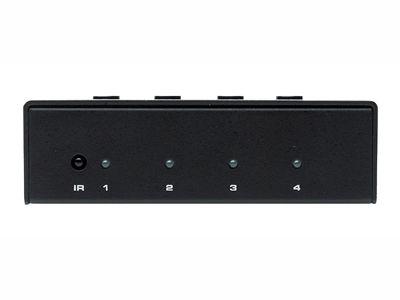
The most basic VGA switcher is 4 inputs by 1 output: four VGA sources sharing a single VGA display. Common configurations: 2x1, 4x1, 8x1. These switchers serve classrooms and training rooms with multiple instructor computers sharing one projector, conference rooms with multiple presenter laptops, and other single-display installations.
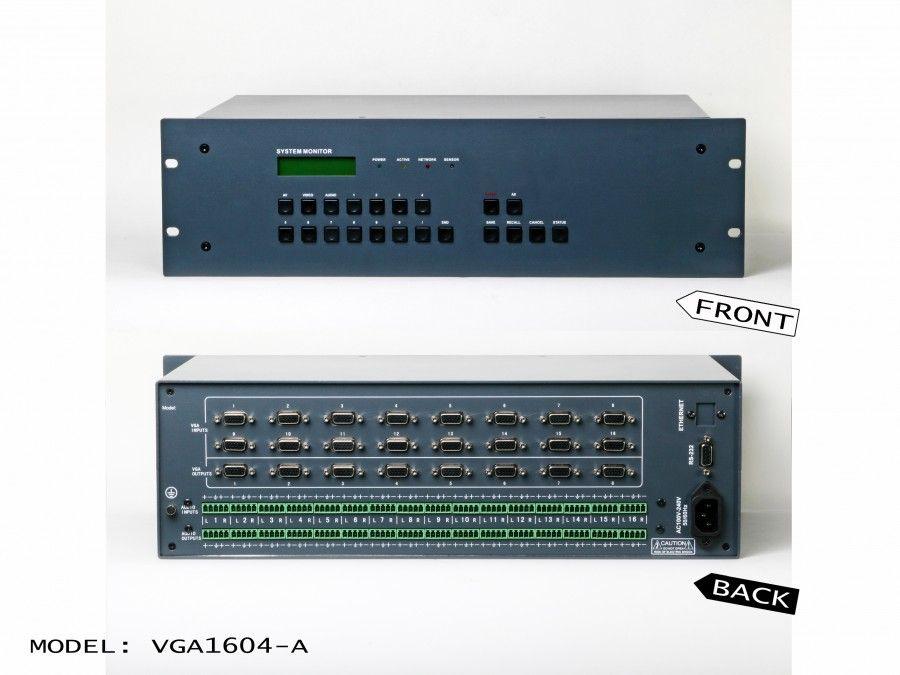
Fixed input/output VGA matrix switchers come in standard configurations: 4x4, 8x8, 16x16, 32x32 or larger chassis. A VGA matrix switcher allows the user to direct any input source to any output display independently. The next level up is modular matrix switchers: the user mixes and matches inputs and outputs on any given chassis, starting small (for example, 4 inputs and 3 outputs on an 8x8 chassis) and adding inputs and outputs as needed without replacing the chassis.
Seamless VGA matrix switchers with picture-in-picture (PIP) features provide high-performance switching and scaling of resolutions up to 1080p. In a professional environment, a true seamless switcher allows transitioning between sources with selectable transition effects (cut, dissolve, fade) and no visible disturbance during switching. The presentation looks polished and professional, important for boardroom presentations, education, and corporate events. Seamless switchers cost significantly more than traditional switchers but make a noticeable quality difference.
Many quality VGA switchers include integrator-friendly EDID management systems. The switcher presents a controlled EDID (display capability data) to each source, regardless of which display is currently selected. This eliminates resolution problems where switching between displays causes sources to renegotiate their output mode, which can cause delays and resolution surprises. EDID management is a staple feature in modern VGA switchers from quality manufacturers.
VGA carries no audio; the 15-pin connector is video only. VGA switchers typically include separate audio handling: 3.5 mm or RCA stereo audio inputs and outputs paralleling each VGA input and output. The audio routes alongside the corresponding VGA video, so when the user selects VGA input 3, audio input 3 routes to the audio output. This keeps video and audio synchronized through the switcher.
Although VGA is gradually being phased out, manufacturers continue to develop quality VGA switchers because the installed base remains large. Common applications: schools and universities (instructor PCs and student computers to projectors and monitors in classrooms), training facilities and corporate education (mixed VGA equipment in older training rooms), multimedia meeting rooms (legacy installations), big screen displays in conferences and events, hospitals and government installations with existing VGA infrastructure, and any commercial AV installation where VGA equipment continues to operate.
Yes, primarily in education, training facilities, hospitals, government, and any environment where the installed base of VGA projectors and computers has not been replaced. VGA-only equipment is no longer manufactured at scale, but vast numbers of existing projectors, classroom displays, budget monitors, and older laptops still have VGA inputs and outputs. Education in particular runs mixed VGA-HDMI environments where VGA must continue to work alongside newer interfaces for many more years. VGA switchers serve these installations.
A basic VGA switcher has multiple inputs and one output (typically 4x1, 8x1): it routes one source at a time to the single output. A matrix switcher has multiple inputs and multiple outputs (4x4, 8x8, 16x16), routing any input to any output independently for simultaneous independent video paths. Use basic switchers for single-display environments (most classrooms, simple conference rooms); use matrix switchers for multi-display environments (large training facilities with multiple projectors, control rooms with multiple monitors, presentation halls with multiple screens). Modular matrix switchers let you customize input and output counts within one chassis.
A seamless VGA matrix switcher changes from one source to another with no visible disturbance: no black screen, no resync delay, no resolution change artifact. With selectable transition effects (cut, fade, dissolve), presentations look polished. Traditional non-seamless VGA switchers blank the screen briefly during switching because the display has to resync to the new source resolution. Seamless switchers use internal scaling to convert all sources to a consistent output resolution, eliminating switching artifacts. Some include picture-in-picture features for displaying multiple sources simultaneously. Used in professional presentations, education, and corporate events where switching artifacts would distract from the content.
VGA itself carries no audio: it's a 15-pin video-only connector. Most quality VGA switchers include parallel audio handling: 3.5 mm or RCA stereo audio inputs and outputs that match each VGA input and output. The audio routes alongside the corresponding video, so selecting VGA input 3 also routes audio input 3 to the audio output. Without this parallel audio handling, video and audio paths would need separate switchers, complicating the installation. Always verify audio support when choosing a VGA switcher; some budget switchers handle video only.
Most modern VGA switchers support resolutions up to 1920x1200 at 60 Hz on quality cable at short distances. Some support higher resolutions up to 2048x1536. As an analog signal, VGA's achievable resolution depends heavily on cable quality and length; longer cable runs may reduce the practical resolution. Quality scalers in the switcher can upscale lower-resolution sources to a consistent output resolution, important for normalizing mixed-resolution VGA sources in modern installations. Always verify the switcher's supported resolutions against your installation's needs.
Schools and universities (the largest segment; instructor PCs and student computers feeding classroom projectors and student monitors, often in matrix configurations for multi-display classrooms), training facilities and corporate education (older training rooms with VGA infrastructure), multimedia meeting rooms with legacy installations, big screen displays in conference and event venues with VGA infrastructure, hospitals and government installations with installed VGA projectors and monitors, courtrooms and legal proceedings with VGA-based evidence display systems, and any commercial AV installation where VGA equipment continues to operate alongside newer HDMI infrastructure.

On order over $300 and more for US and US territory

We Offer a 30-Day Money Back Guarantee

Full manufacturer's warranty and quality assurance

Safe checkout with trusted payment providers