




Start typing to see results...
Find the perfect solution
Security equipment in commercial AV installations covers the cameras, recorders, monitors, and accessories used for video surveillance and security monitoring. While security is its own industry with dedicated products, many AV installers and integrators handle small-to-medium security installations alongside their AV work, especially in commercial spaces where AV and security infrastructure overlap (cameras feeding monitoring walls, AV control systems managing access control, AV displays showing security information).
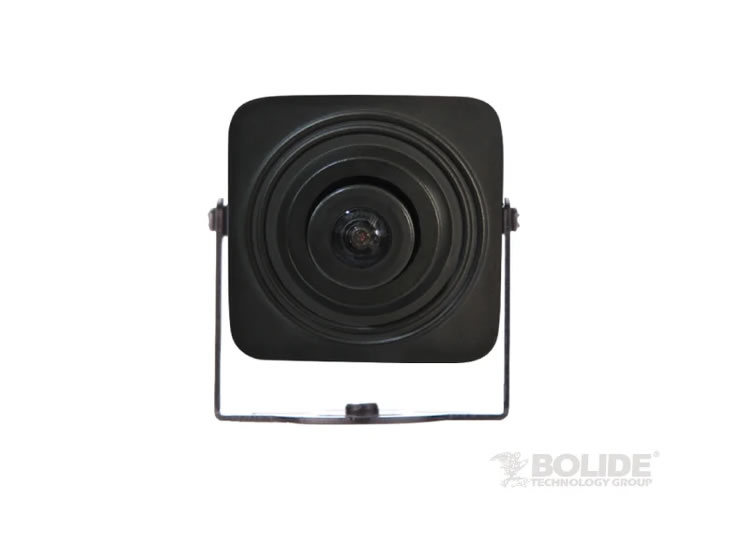
CCTV (Closed-Circuit Television) cameras come in many types for different applications. IP cameras connect to networks via Ethernet (often with PoE for power), supporting modern features like high resolution (1080p to 4K), wide dynamic range for varying lighting, smart analytics (motion detection, face detection, people counting), and integration with video management software. Analog cameras (still in service in many existing installations) use composite or HD-SDI over coaxial cable. Specialty cameras include dome cameras (discreet, vandal-resistant), bullet cameras (highly directional), PTZ cameras (remotely controllable for tracking), and thermal cameras for low-light or specialty monitoring.
Network Video Recorders (NVRs) record video from IP cameras over the network, storing recorded video on hard drives for later review. Digital Video Recorders (DVRs) do the same for analog cameras over direct cable connections. Modern installations are mostly NVR-based because IP cameras dominate new deployments. NVRs come in capacities from 4 cameras (small installations) to 64+ cameras (large facilities), with corresponding storage from a few terabytes to dozens of terabytes for long retention.
Security monitoring uses dedicated displays for viewing live and recorded video. Single-monitor displays show one or a few cameras at a time. Multi-monitor or video wall installations show many cameras simultaneously across an array of displays, common in security operation centers. Quality security monitors are designed for 24/7 operation, similar to commercial digital signage displays but typically tuned for accurate color and detail rather than maximum brightness.
Video management software (VMS) is the operational interface for security monitoring: viewing live cameras, reviewing recorded video, searching for specific events, managing user access and permissions, and integrating with other security systems (access control, alarms, fire). Common VMS platforms include Milestone XProtect, Genetec, Avigilon, ExacqVision, and many others. The choice of VMS significantly affects day-to-day operation and is usually a long-term decision.
Modern commercial buildings often integrate security and AV systems: security camera feeds appear on lobby AV displays for visitor awareness, AV control systems trigger security recording during incidents, emergency notification systems use AV displays and audio for alerts, and integrated access control coordinates conference room access with AV setup. This integration improves operational efficiency and leverages existing infrastructure.
Most modern IP security cameras use PoE for power, simplifying installation by carrying both data and power over one CAT cable. PoE+ (30W) supports most cameras including PTZ models; PoE++ (60W to 90W) supports higher-power cameras with heaters for outdoor use or pan-tilt-zoom motors. PoE infrastructure (PoE switches, PoE injectors) is essential for any modern IP-based security installation.
Security equipment serves retail (loss prevention, customer behavior analytics), hospitality (guest safety, public area monitoring), healthcare (patient safety, asset protection, perimeter security), education (campus safety, classroom monitoring, perimeter security), corporate environments (access control integration, executive area monitoring), industrial facilities (perimeter security, production area safety monitoring), transportation (airports, train stations, bus terminals with extensive security infrastructure), and government and military installations.
For any new installation, choose IP cameras. They offer higher resolution (1080p to 4K standard, vs. mostly SD for analog), modern features (analytics, smart events, mobile access, cloud integration), simpler cabling (one CAT cable carries video and power via PoE, vs. separate coax and power for analog), and better integration with modern video management software. Analog cameras are still in service in many existing installations, and analog gear remains available for retrofit or expansion of existing analog systems, but new construction and modernization projects almost always use IP cameras.
A Network Video Recorder (NVR) records video from IP cameras over a network connection (Ethernet), storing recorded video on hard drives for later review. A Digital Video Recorder (DVR) records from analog cameras over direct cable connections (coax with composite video, or HD-SDI). Modern installations are mostly NVR-based because IP cameras dominate; DVRs serve installations with existing analog camera infrastructure. Hybrid recorders accept both IP and analog cameras, useful for installations migrating from analog to IP in stages.
Retention depends on the application and any regulatory requirements. Retail typically retains 30 to 90 days. Hospitality and many corporate environments retain 30 days. Healthcare and education often retain 30 to 60 days. Government and high-security installations may retain 90 days, 1 year, or longer based on regulations. Storage requirements scale with retention, resolution, frame rate, camera count, and motion-only vs. continuous recording. A typical 16-camera 1080p installation with 30-day retention needs about 10 to 30 TB of NVR storage depending on the exact settings.
Video analytics use AI and computer vision to analyze camera feeds in real time, detecting specific events: motion in defined zones, people entering or leaving areas, abandoned objects, crowd density, vehicle detection, license plate recognition, face detection, and behavior patterns. Analytics turn passive recording into active monitoring: instead of an operator having to watch many cameras, the system alerts on relevant events. Analytics are useful in retail (loss prevention, traffic counting), hospitality (perimeter security alerts), industrial (safety zone monitoring), and any installation where active alerting is more valuable than after-the-fact review.
PoE carries both data and DC power over one Ethernet cable, eliminating the need for a separate power supply at each camera. The PoE source (a PoE-capable network switch or a separate PoE injector) provides power to the camera through the CAT cable; the camera draws power as needed. PoE+ (IEEE 802.3at) provides up to 30W per port, enough for most cameras including PTZ models. PoE++ (IEEE 802.3bt) provides up to 60W or 90W, supporting higher-power cameras with built-in heaters for outdoor use or larger PTZ motors. PoE simplifies installation by reducing cable runs from two (data plus power) to one.
Retail (loss prevention, customer behavior analytics, employee safety), hospitality (guest safety, public area monitoring, parking facility security), healthcare (patient safety, asset protection, perimeter security, sensitive area monitoring), education (campus safety, classroom monitoring, perimeter security, sports facility coverage), corporate environments (access control integration, executive area monitoring, perimeter security, parking), industrial facilities (perimeter security, production area safety monitoring, equipment protection), transportation (airports, train stations, bus terminals with extensive security infrastructure), and government and military installations (where security requirements are particularly demanding).

On order over $300 and more for US and US territory

We Offer a 30-Day Money Back Guarantee

Full manufacturer's warranty and quality assurance

Safe checkout with trusted payment providers