Start typing to see results...
Find the perfect solution
Mounting Solutions covers the physical hardware that attaches AV equipment to walls, ceilings, racks, tables, stands, and other structures. The category is broad and essential: every piece of AV equipment must be mounted somewhere, and the right mounting hardware determines whether the installation looks professional, performs reliably, and survives long-term use. Mounting Solutions includes mounting accessories, rack adapters and mounts, equipment racks and enclosures, speaker mounts, table mounts, wall mounts, and stands and carts.
Equipment racks house the rack-mount AV equipment in commercial installations: switchers, amplifiers, processors, control systems, recording appliances, and network gear. Racks come in standard sizes (19-inch wide internally is the universal standard, with various rack unit (U) heights specifying the rack's overall height). Racks can be open-frame (just rails and basic structure, the lowest cost) or fully enclosed (with doors, sides, and locking access for security and protection). Floor-standing racks support heavy equipment and tall installations; wall-mount and rack drawers serve smaller installations.
Wall mounts attach flat-panel displays, projectors, and other AV equipment to walls. Display mounts come in several styles: fixed mounts (the display stays in one position, lowest cost), tilt mounts (display can tilt up or down for viewing angle adjustment), full-motion mounts (display can pivot, tilt, and extend from the wall on an articulating arm), and ceiling mounts for display from above. The right mount depends on the display size and weight, the wall construction, the required adjustability, and the aesthetic.
Table mounts integrate AV equipment into the conference table, lectern, podium, or other furniture surface: cable cubbies and pop-up boxes for connections, microphone arrays for room audio, touch panels for room control, and integrated monitor lifts for some premium installations. Quality table mounts make the room look polished by hiding equipment when not in use and presenting clean connections to users.
Speaker mounts attach loudspeakers to walls, ceilings, trusses, poles, and other structures. They include wall mounts with tilt and swivel for proper aim, ceiling pendant mounts for high-ceiling spaces, pole mounts for outdoor and stadium installations, ground stacks and yokes for live sound, and rigging hardware for flying speakers in concert and theater applications. Always specify mounts rated for at least 1.5 times the speaker's weight for safety.
Stands and carts mount AV equipment without permanent attachment to a building structure. Speaker stands and tripods elevate speakers for events and rental applications. Display stands and carts hold flat-panel displays at viewing height, often with wheels for moving the display between rooms. Equipment carts hold AV racks and equipment for portable installations and rental use. These mounts are essential for events, rental and staging, and installations where flexibility matters more than permanent installation.
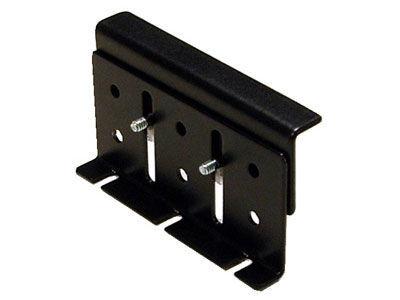
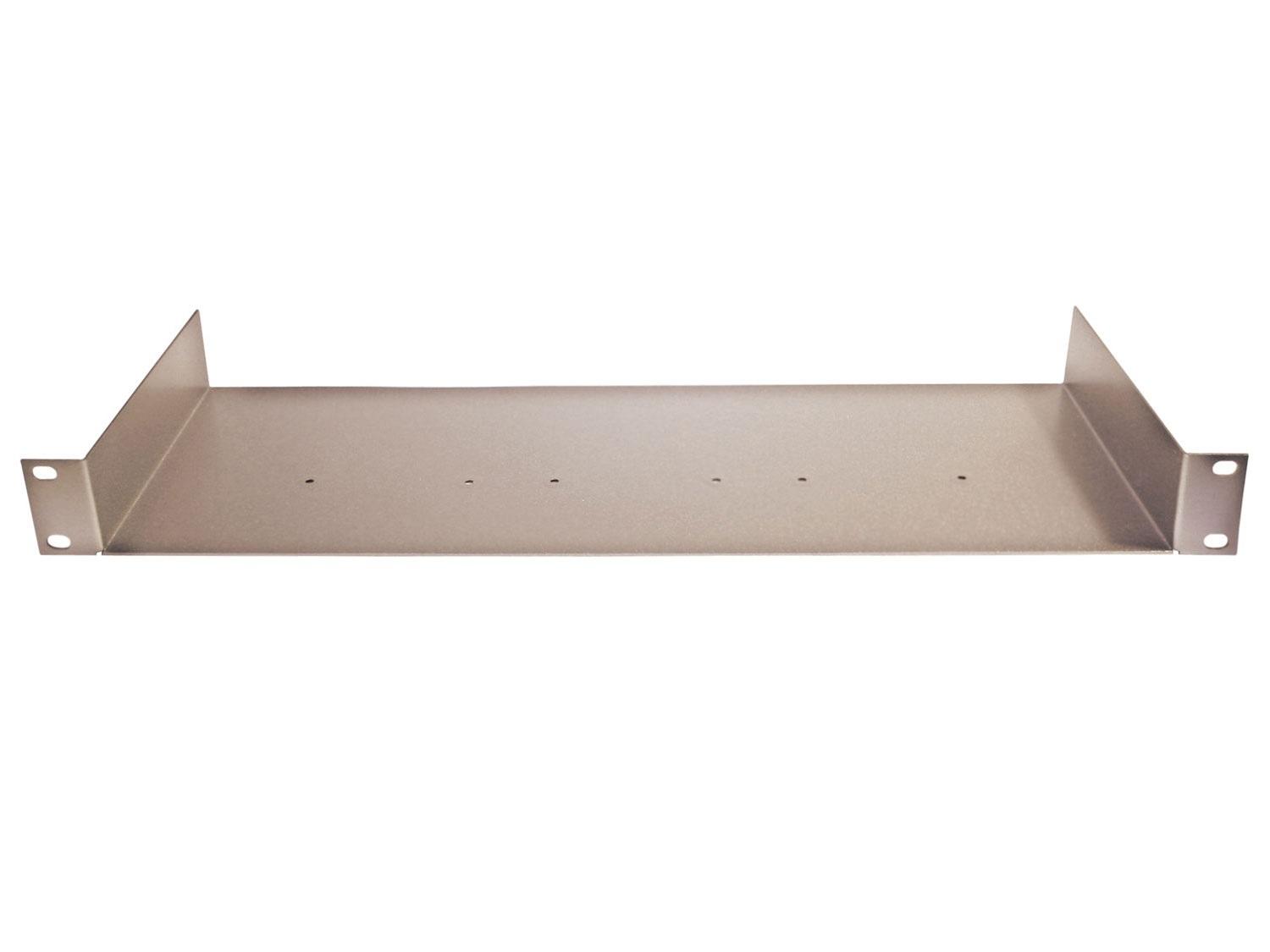
Rack adapters convert non-rack equipment to rack-mount: shelf accessories for placing non-rack equipment in a rack, rack ears for converting tower and desktop PCs, blanking panels to fill empty rack spaces for proper airflow and security, and various conversion hardware. They let installers use mixed equipment in standard racks rather than requiring all equipment to be rack-native.
Mounting solutions are essential in every commercial AV installation: equipment racks in every equipment room (housing the AV gear), wall mounts on every display (residential, conference rooms, classrooms, digital signage, hospitality), table mounts in every conference room and boardroom, speaker mounts in every audio installation (residential, commercial, live sound), and stands and carts in rental and staging operations. The mounting hardware is often a small line item in the overall budget but determines whether the installation looks professional and lasts long-term.
Equipment racks use 19-inch wide internal dimensions (a universal standard), with rack heights specified in U (rack units), where 1U equals 1.75 inches. Common heights: 12U (small wall-mount), 25U (mid-size floor-standing), 42U (full-size floor-standing for typical equipment rooms), and 48U or 52U (extra-tall for dense installations). Depth varies from shallow racks (about 12 to 20 inches, for smaller equipment) to deep racks (24 to 36 inches, for servers and audio amplifiers). Always size the rack with margin for future expansion and proper cable management.
Three main considerations: the display size and weight (the mount must be rated for the display's actual weight, ideally with 25 to 50 percent margin), the wall construction (the mount's anchor solution must match drywall, concrete, brick, or other wall types), and the required adjustability (fixed mounts are cheapest, tilt mounts allow viewing angle adjustment, full-motion mounts allow positioning and extension). For most commercial AV installations, a tilt-and-swivel wall mount with proper wall anchoring serves typical viewing position requirements. For displays seen from many angles, full-motion is worth the additional cost.
The mount should be rated for at least 1.5 to 2 times the actual weight of the speaker, providing safety margin for dynamic loads (vibration, accidental impact, long-term fatigue). For a 20-pound speaker, the mount should be rated for at least 30 to 40 pounds. Always check both the speaker's published weight and the mount's load rating. For overhead speakers (ceiling pendant, flown rigging), the load rating is critical for safety: a falling speaker can injure people below. Never use undersized mounts on overhead speakers, and always anchor properly to structural elements.
Use a tilt mount when the display can stay in a fixed location with only minor viewing angle adjustment (a wall-mounted TV in a single seating area, a classroom projector that needs slight tilt adjustment). Use a full-motion (articulating arm) mount when the display needs to be repositioned regularly (a conference room display that adjusts for different meeting types, a kitchen TV that pulls out for cooking and pushes back for cleaning), or when the display must serve multiple seating positions in different room layouts. Full-motion mounts cost more but provide much more flexibility.
A blanking panel is a flat metal or plastic plate that covers an empty rack space, screwed into the rack rails like any other equipment. Blanking panels matter for two reasons. Airflow: rack-mount equipment with fans depends on cool air entering the front of the rack and hot air leaving the back; empty spaces let hot air recirculate, reducing cooling effectiveness. Blanking panels force airflow through the equipment rather than around it. Security: blanking panels prevent unauthorized access to the inside of the rack from the front, which matters in environments where physical security is important.
Every commercial AV installation needs mounting hardware: equipment racks in every equipment room (housing the AV gear in organized, serviceable layout), wall mounts on every display in residential, conference rooms, classrooms, digital signage, and hospitality installations, table mounts in every conference room and boardroom (cable cubbies, pop-up boxes, integrated microphone arrays), speaker mounts in every audio installation (residential, commercial, live sound, houses of worship), stands and carts in rental and staging operations, and specialty mounting hardware for unique installations. The right mounting hardware determines whether the install looks professional and survives long-term.

On order over $300 and more for US and US territory

We Offer a 30-Day Money Back Guarantee

Full manufacturer's warranty and quality assurance

Safe checkout with trusted payment providers