




Start typing to see results...
Find the perfect solution
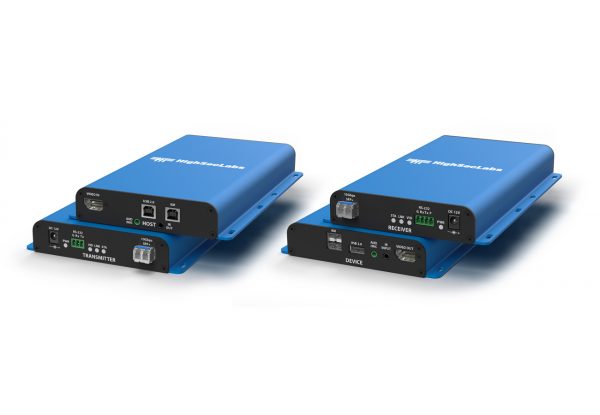
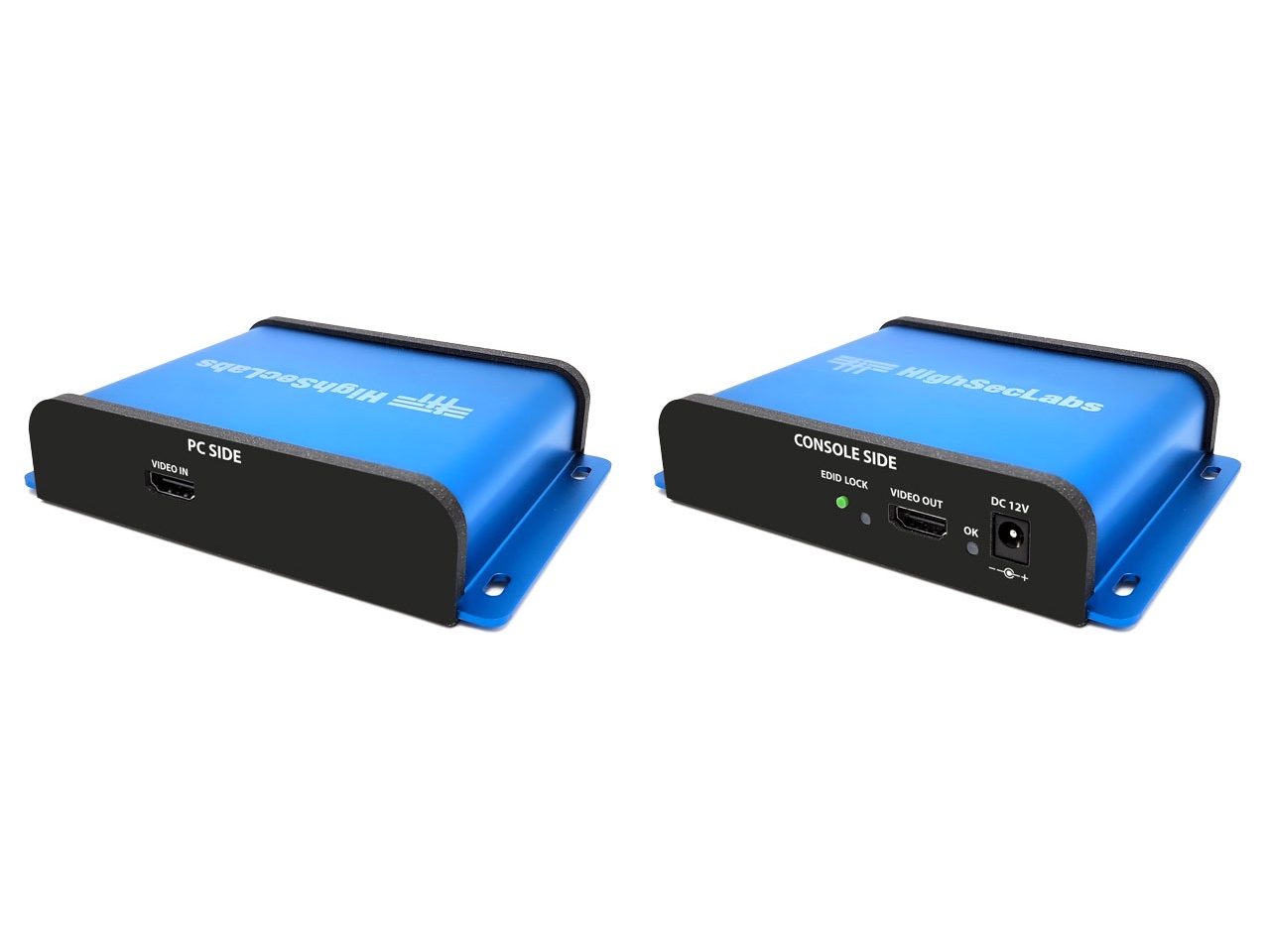
HDMI extenders are AV devices that send HDMI video, audio, and control signals over long distances. A typical HDMI cable runs only about 50 feet before signal degradation appears: sparkles, flickering, or no picture at all. When the application requires longer cable runs (restaurants, large facilities, schools, meeting rooms, sports bars, houses of worship), HDMI extenders are the right tool. They consist of a transmitter at the source side, a receiver at the display side, and the cable between them (CAT5e/6, coaxial, fiber, or wireless).
HDMI extenders use several transport media. UTP/category cables (CAT5e or CAT6) with HDBaseT technology extend HDMI up to 330 feet (100 meters). Coaxial cable carries HDMI up to about 100 feet, useful in residential installations with pre-wired coax. Fiber optic cable extends HDMI to extremely long distances, up to 30 km (18.75 miles), making large facilities, stadiums, and airports practical. Wireless HDMI extenders carry HDMI signals 40 to 80 feet without any cable, ideal for boardrooms and presentations.
HDBaseT has gained popularity over the years for its ability to extend HDMI up to 330 feet on standard CAT cable. Besides video and audio, HDBaseT also carries control signals (IR, RS-232), Ethernet, and power (POE), making it a comprehensive solution for integrators. One CAT cable replaces what would otherwise require many separate cables for AV, control, network, and power. HDBaseT supports full 4K HDR video at the rated distance.
For shorter distances (around 100 feet), coaxial HDMI extenders work well, especially in residential installations where the home is already pre-wired with coax for cable TV. The HDMI extender uses the existing coax to carry video and audio between rooms, eliminating the need to pull new cable. This is a popular choice for home theater installations where the equipment rack is in one room and the displays are in others.
For extremely long distances, fiber optic HDMI extenders are the right choice. They cover distances of 30 km (18.75 miles) over fiber cabling, making large facilities, stadiums, airports, and university campuses practical. Fiber is immune to electrical interference, supports very high bandwidth, and is the only practical choice for cross-building or cross-campus HDMI distribution.
Modern HDMI extenders carry more than just video and audio. They commonly include bi-directional IR (for controlling source equipment from the receiver location), RS-232 (for control system integration), Ethernet pass-through (useful when the display location needs network connectivity), POE (Power over Ethernet, so the receiver gets power over the same CAT cable that carries the AV signal), and 3D video support. Multi-output transmitters and loop-out receivers support daisy-chaining and signal amplification.
HDMI extenders come in various form factors. The traditional box form factor sits behind a display or in an equipment rack. Wall plate versions install into standard electrical boxes, presenting a clean professional appearance in boardrooms and classrooms. Surface-mount versions attach to walls or under tables. Some manufacturers offer transmitter chassis that combine multiple inputs (HDMI plus VGA, for example) with built-in scaling, plus multiple outputs for distributing the signal to several displays.
HDMI extenders are essential in restaurants and bars (cable boxes or streaming devices in equipment rooms to TVs throughout the venue), large facilities (one source to many displays across a building), schools (instructor's source to displays in classrooms across the school), meeting rooms (table-top sources to wall-mounted displays), stadiums and airports (broadcast feeds to public displays), houses of worship (booth equipment to platform displays and overflow rooms), and any commercial or residential installation where the source and display are more than 50 feet apart.
You need an HDMI extender whenever the cable run between source and display exceeds about 50 feet (15 meters) for 4K or 1080p content. Beyond that distance, passive copper HDMI cable starts to degrade, showing as sparkles, flickering, or no picture at all. Extenders carry the signal cleanly the full distance: HDBaseT over CAT cable for up to 330 feet, coaxial extenders for about 100 feet, fiber for very long distances (kilometers). Common scenarios: residential AV (source room to display room), boardrooms (rack equipment to wall displays), restaurants and bars (back-of-house to customer-facing TVs), and large venues with long signal paths.
HDBaseT is a video extension technology that carries HDMI signals (with embedded audio), control signals (IR, RS-232), Ethernet, and power (PoE) over a single CAT5e, CAT6, or CAT6a cable for up to 100 meters (330 feet). The transmitter packages all these signals together onto the network cable; the receiver unpacks them at the other end. HDBaseT supports full 4K HDR video at the rated distance, making it the workhorse extension technology in modern commercial AV. CAT6 is the typical minimum recommended cable type for full HDBaseT performance.
Distance depends on the transport medium. HDBaseT over CAT cable: up to 100 meters (330 feet) reliably, with some products supporting longer distances at reduced specifications. Coaxial HDMI extenders: about 100 feet using existing coaxial infrastructure. Fiber optic HDMI extenders: 1000 feet typical, up to 30 km (18.75 miles) with appropriate fiber and transceivers. Wireless HDMI extenders: 40 to 80 feet typically, with some longer-range professional products. Choose the technology that matches the required distance and the available cable infrastructure.
Most modern HDMI extenders carry audio automatically (embedded in the HDMI signal). HDBaseT extenders also carry bi-directional IR (so a remote control at the display location can control source equipment at the rack), RS-232 (for control system integration), and often Ethernet pass-through (giving network connectivity at the display location). Some include PoE so the receiver gets power over the same CAT cable, eliminating the need for a separate power outlet at the display. Always verify the specific features when choosing an extender: capability varies by model.
An extender carries one HDMI signal from one source to one display over a long distance, with a transmitter at the source and a receiver at the display. A splitter takes one HDMI source and produces multiple identical outputs, distributing the same signal to many displays. Some extenders combine functions: a 1-to-many extender has one transmitter and multiple receivers, distributing the source to many displays each at long distance. For maximum flexibility, the typical architecture is a distribution amplifier (splitter) at the source plus separate extender pairs for each display.
Restaurants and bars (cable boxes, streaming devices, or video servers in equipment rooms feeding TVs throughout the venue), large facilities (one source feeding many displays across a building, often via HDBaseT or fiber), schools and education (instructor's HDMI source to display in the classroom; classroom AV to displays in adjacent overflow rooms), meeting rooms and boardrooms (table-top laptop or PC to wall-mounted displays, often using wall-plate transmitters for clean aesthetics), stadiums and airports (broadcast feeds and information displays at long distances), houses of worship (booth equipment to platform displays and overflow rooms), and any installation where the source and display are more than 50 feet apart.

On order over $300 and more for US and US territory

We Offer a 30-Day Money Back Guarantee

Full manufacturer's warranty and quality assurance

Safe checkout with trusted payment providers