




Start typing to see results...
Find the perfect solution
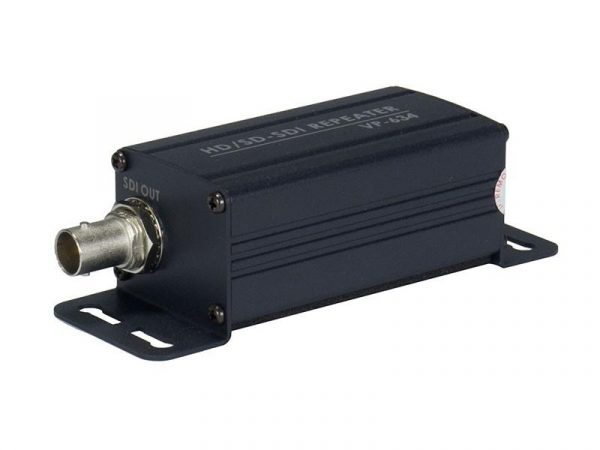
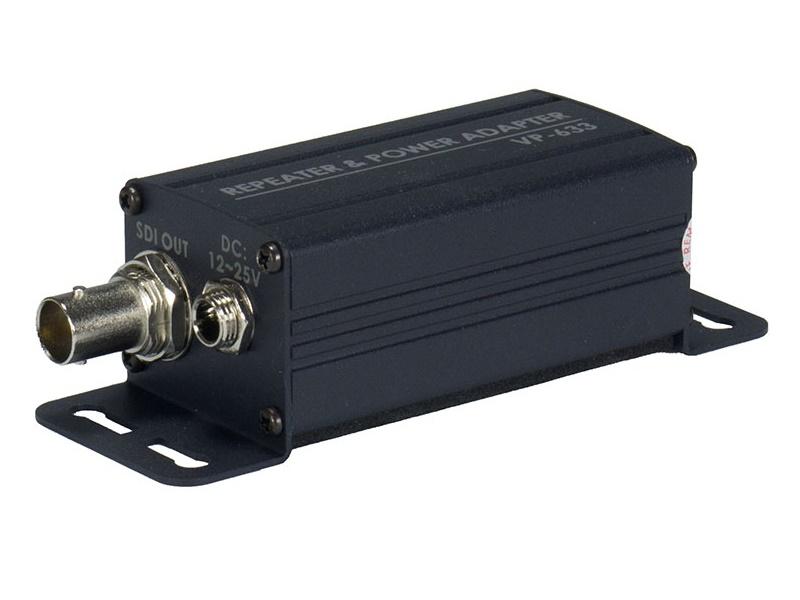
SDI (Serial Digital Interface) is a digital interface used in broadcast-grade video, studio, live staging, and post-production environments. The SDI standard allows transmission of uncompressed and unencrypted digital video signals over 75-ohm coaxial cable with locking BNC connectors. SDI comes in several variants (SD-SDI for SD, ED-SDI, HD-SDI for 1080i/720p, Dual Link HD-SDI, 3G-SDI for 1080p60, 6G-SDI for 4K30, and 12G-SDI for 4K60). SDI extenders carry these signals over distances greater than standard coax can support, using cable equalizers, regenerators, or fiber optic transport.
SDI on quality coax already carries long distances natively without extension. SD-SDI runs 300+ meters on standard cable. HD-SDI runs about 200 meters. 3G-SDI runs about 100 meters. 6G-SDI runs about 70 meters. 12G-SDI runs about 50 meters. The higher the SDI rate, the shorter the practical cable distance. Beyond these limits, signal degradation appears as pixelation, dropouts, or no picture. SDI extenders push these limits further.
The easiest and most convenient route for extending SDI is using a cable equalizer or signal regenerator. A cable equalizer compensates for the high-frequency loss on long coax runs, recovering the signal at the receiver end. A signal regenerator goes further: it re-clocks the signal entirely, producing a clean output as if from the original source. SDI cable equalizers typically extend HD-SDI signals up to 400 feet (120 meters) and SD-SDI up to 500 feet (150 meters) on quality coaxial cable. For longer runs or higher SDI rates, multiple regenerators can be chained along the path.
For applications requiring much longer extension, fiber optic SDI extenders are the only practical choice. They convert the SDI signal to a fiber-friendly format at the transmitter, carry it through standard fiber patch cables, and convert back to SDI at the receiver. Fiber optic SDI extenders can extend 3G-SDI, HD-SDI, and SD-SDI signals up to 30 km (18.75 miles) on single-mode fiber. They are essential in environments including airports, stadiums, building-to-building installations, large facilities, and university campuses.
Not all SDI extenders accommodate the various SDI standards. Some extenders are specific to one rate (HD-SDI only, or 3G-SDI only); others auto-detect and handle multiple rates. Always verify the extender's supported SDI rates match what your installation needs. For mixed-rate facilities (with some HD-SDI and some 3G-SDI equipment), multi-rate extenders are more flexible. For future-proofing, look for extenders that support 12G-SDI even if your current equipment is HD-SDI only.
SDI embeds up to 16 channels of audio along with the video signal, plus timecode, closed-caption data, and other metadata. Quality SDI extenders preserve all of this embedded data through extension, so the receiver gets the complete signal as the source produced it. Budget extenders may strip some embedded data, especially less common metadata. For broadcast applications where timecode and metadata matter, verify the extender preserves the full embedded signal.
SDI extenders come in small box form factors that sit behind equipment or in a rack, in wall-plate versions for clean professional installations, and in rack-mount chassis for larger broadcast facilities. Some include built-in distribution: one input feeding multiple extended outputs, or multiple inputs combined into one extended signal for downstream routing.
SDI extenders are essential in broadcast facilities (long camera cable runs from stages to control rooms, tie lines between control rooms, contribution feeds from venues to studios), live event production (camera runs at concerts, theater, sports), houses of worship with serious video production (camera positions to broadcast booth or production room), large-venue installations (stadiums, arenas, convention centers), and cross-building or cross-campus broadcast tie lines.
You need an SDI extender whenever the SDI cable run exceeds the practical limit of direct coax. SD-SDI runs 300+ meters natively; HD-SDI 200 meters; 3G-SDI 100 meters; 12G-SDI 50 meters. For runs beyond these limits, cable equalizers or signal regenerators extend the distance by 50 to 100 percent. For very long runs (over 400 to 500 feet) or for cross-building installations, fiber optic SDI extenders are the only practical choice. Common scenarios: stadium camera positions to control rooms, theater camera runs to the booth, cross-campus broadcast tie lines.
A cable equalizer compensates for the high-frequency loss on long coax runs, restoring the signal so the receiver can decode it. The output is the same signal as the input, just with the cable loss compensated. A signal regenerator goes further: it decodes the SDI signal, re-clocks it, and produces a clean output as if from the original source. Regeneration is more rigorous than equalization, eliminating accumulated jitter and timing errors. For very long runs or for chaining multiple stages, regeneration is preferable; for moderate extension where the source signal is already clean, equalization is sufficient and cheaper.
Up to 30 km (18.75 miles) on single-mode fiber with appropriate transceivers. Multimode fiber typically supports 300 to 500 meters depending on the data rate. For most cross-building campus installations, multimode SDI extenders are sufficient and cost-effective. For cross-city broadcast contribution circuits or very long campus tie lines, single-mode is the right choice. Some specialty fiber SDI extenders support even longer distances (hundreds of kilometers) with optical amplification, used in long-haul broadcast contribution networks.
Quality SDI extenders preserve all the embedded data in the SDI signal: up to 16 channels of audio, timecode, closed-caption data, and other metadata. The complete signal arrives at the receiver as the source produced it. Budget extenders may strip some embedded data, especially less common metadata channels. For broadcast applications where timecode synchronization, multi-channel audio, or specialty metadata matter, verify the extender preserves the full embedded signal: it should be a transparent extension, not a video-only extension that drops the embedded data.
Some do, some don't. Multi-rate SDI extenders auto-detect and handle SD-SDI, HD-SDI, and 3G-SDI (and sometimes 12G-SDI) automatically. Single-rate extenders are limited to one variant. For mixed-rate facilities or for future-proofing, multi-rate extenders are more flexible. Always verify the specific SDI rates the extender supports against the rates in your installation, and choose accordingly. For 12G-SDI specifically (4K UHD), specialized cables and extenders are required because the bandwidth is much higher than HD-SDI.
Broadcast facilities (long camera cable runs from stages and remote locations to control rooms, tie lines between control rooms, contribution feeds from venues to studios), live event production (camera runs at concerts, theater, sports, and corporate events where the camera position is far from the production booth), houses of worship with serious video production (camera positions in the sanctuary connecting to the broadcast booth or production room), large-venue installations (stadiums, arenas, convention centers where SDI infrastructure spans hundreds or thousands of feet), educational broadcasting (school TV studios with cameras far from the control room), and cross-building or cross-campus broadcast tie lines.

On order over $300 and more for US and US territory

We Offer a 30-Day Money Back Guarantee

Full manufacturer's warranty and quality assurance

Safe checkout with trusted payment providers