




Start typing to see results...
Find the perfect solution
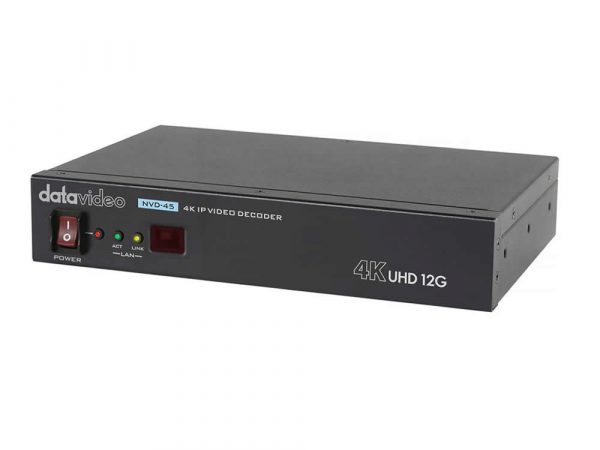
SDI (Serial Digital Interface) video converters bridge SDI signals with other video formats. SDI is part of the digital video family first standardized by SMPTE (Society of Motion Picture and Television Engineers). It transmits uncompressed and unencrypted digital video signals in studio, live staging, post-production, and other broadcast-grade applications. SDI uses 75-ohm coaxial cable with locking BNC connectors and comes in multiple standards (SD-SDI, ED-SDI, HD-SDI, Dual Link HD-SDI, 3G-SDI, 6G-SDI, and 12G-SDI) to support increasing video resolutions and bandwidths.
The main purpose of SDI converters is to bridge SDI signals to other formats (DVI, HDMI, component, S-Video, composite) or to other SDI standards, in either direction. SDI converters are needed whenever a broadcast or production environment includes equipment that does not all speak the same format. A typical example: a 3G-SDI camera working with an HDTV that only has HDMI inputs. The 3G-SDI to HDMI converter takes the broadcast-grade signal and converts it to commercial-grade HDMI for the display.
SDI to HDMI is the most common conversion direction in mixed broadcast and commercial AV environments. It takes a professional SDI signal (usually 3G-SDI for 1080p60 or 12G-SDI for 4K UHD) and converts it to HDMI for connection to commercial monitors, projectors, or recording devices that don't have SDI inputs. The conversion is active, with the converter handling the digital format change, the embedded audio extraction, and optional HDCP encoding for protected output.
HDMI to SDI goes the other direction: taking a commercial HDMI source (laptop, presentation system, streaming device, gaming console) and converting it to SDI for use with broadcast infrastructure. The converter handles the HDCP handshake (some HDMI sources may refuse to pass HDCP-protected content to SDI for copy-protection reasons; verify the converter's HDCP handling) and embeds the HDMI audio into the SDI signal for downstream production routing.
SDI to component, SDI to composite, and SDI to S-Video converters bridge SDI broadcast equipment to legacy analog displays. The conversion is active with a digital-to-analog converter (DAC) producing the appropriate analog format. Audio breaks out separately on stereo RCA, balanced XLR, or other analog connectors. These conversions are used in broadcast monitoring with legacy analog displays, in hospitality TV systems where modern broadcast feeds need to drive older displays, and in transitional installations where modernization is happening in stages.
Some SDI converters bridge between different SDI standards: SD-SDI to HD-SDI (upconversion), 3G-SDI to 12G-SDI (for 4K integration), or down-conversion for legacy SDI equipment. This is essential when newer 4K cameras need to feed older HD-SDI broadcast infrastructure, or when legacy SD-SDI equipment needs to be upconverted into modern HD or UHD production chains.
SDI converters are widely used in broadcast facilities (camera to switcher conversion, switcher output to monitoring), live event production (broadcast cameras feeding commercial display infrastructure), houses of worship with broadcast-quality video (SDI cameras feeding HDMI streaming encoders and commercial displays), educational broadcasting (school TV studios with mixed SDI and HDMI equipment), and any installation where broadcast SDI gear coexists with commercial or consumer AV equipment.
You need an SDI converter whenever you have to bridge SDI broadcast equipment with non-SDI equipment, or between different SDI standards. Common scenarios: a 3G-SDI broadcast camera output going to an HDMI HDTV or commercial display, a 4K 12G-SDI camera feeding an HD-SDI switcher (requires down-conversion), an HDMI presentation source needing to enter a broadcast SDI production chain, or SDI broadcast monitoring feeds connecting to legacy analog displays. The converter handles the format change, audio handling, and any required resolution or standard conversion.
SDI is a professional broadcast interface that uses 75-ohm coaxial cable with locking BNC connectors. It carries uncompressed video with embedded audio over long distances (100+ meters at HD, 50 meters at 12G), with no HDCP overhead and no negotiation delays. HDMI is a consumer and commercial AV interface that uses multi-pin cable over shorter distances (typically under 25 to 50 feet), with HDCP copy protection and EDID handshakes. SDI dominates broadcast and live production; HDMI dominates commercial AV integration and consumer electronics. Converters bridge between the two whenever both formats need to coexist.
The HDMI side handles HDCP just like any HDMI converter; the SDI side has no HDCP because SDI is a professional broadcast interface that doesn't implement copy protection. When converting HDMI to SDI, the HDMI source may refuse to pass HDCP-protected content (Blu-ray, streaming services) to the SDI output because SDI is unprotected and could be recorded. This is a design choice in many HDMI sources. For HDCP-protected content needing to enter an SDI workflow, use a source without HDCP-protected output, or use specific equipment designed to handle this case.
SDI variants by bandwidth: SD-SDI (270 Mbps for SD video), ED-SDI (variant for enhanced definition), HD-SDI (1.485 Gbps for 1080i and 720p), Dual Link HD-SDI (combined for higher bandwidth), 3G-SDI (3 Gbps for 1080p60), 6G-SDI (6 Gbps for 4K30), and 12G-SDI (12 Gbps for 4K60). Most modern SDI converters support 3G-SDI minimum and are backward compatible with HD-SDI and SD-SDI. For 4K UHD work, look for converters explicitly supporting 6G-SDI or 12G-SDI. Always match the converter's SDI rate capability to the highest bandwidth signal in your installation.
Yes. SDI embeds up to 16 channels of audio along with the video signal, plus timecode and other metadata. SDI converters extract the embedded audio when converting to formats that handle audio separately (analog with breakout audio outputs, or HDMI with embedded audio), or accept external audio inputs to embed into the SDI output when converting from other formats. Quality SDI converters preserve all audio channels and the synchronization with video; budget converters may handle only stereo or limit the audio channel count.
Broadcast facilities (cameras to switchers, switchers to monitor walls, integration of HDMI source equipment with SDI production chains), live event production (broadcast cameras feeding HDMI commercial displays for venue signage, or HDMI laptops feeding SDI broadcast trucks for events), houses of worship with broadcast-quality video (SDI cameras feeding HDMI streaming encoders, mixed SDI and HDMI production), educational broadcasting (school TV studios with mixed equipment), film and post-production (SDI cameras and recorders integrating with HDMI editing workstations), and any installation where broadcast SDI gear coexists with commercial or consumer AV equipment.

On order over $300 and more for US and US territory

We Offer a 30-Day Money Back Guarantee

Full manufacturer's warranty and quality assurance

Safe checkout with trusted payment providers