Start typing to see results...
Find the perfect solution
Fiber optic link cables send signals through hair-thin strands of plastic fiber or glass, carrying data as pulses of light rather than as electrical current. Light is guided through the center of the fiber (called the core), which is surrounded by cladding that traps the light using total internal reflection. Fiber optic link cables enable data transmission from point A to point B via a transmitter at one end and a receiver at the other, with possibly one or more fiber amplifiers in between for very long runs.
There are two fundamentally different types of fiber optic link cables. Single-mode fiber has a very thin core (about 9 microns) and allows only one mode of light to propagate, which lowers attenuation and lets the signal travel much further. Multimode fiber has a larger core (typically 50 or 62.5 microns) that allows multiple modes of light to enter, which increases the data that can pass through over short distances but causes higher dispersion and attenuation, lowering signal quality over long distances.
Single-mode fiber is the choice for long distances: 10 kilometers easily, 80+ km with the right transceivers, suitable for cross-campus and cross-city runs. Multimode fiber is the choice for shorter distances at lower cost: typically up to 300 to 500 meters at 10 Gbps for OM3/OM4 multimode, used for in-building backbones and within-room equipment connections. Both support very high bandwidth: 10 Gbps is standard, 25 Gbps, 40 Gbps, and 100 Gbps are increasingly common.
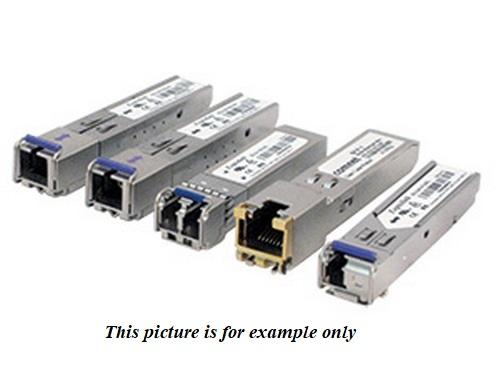
Fiber optic cables use several connector types. LC is the most common in modern installations: small, dense, and supporting modern transceivers (SFP, SFP+, QSFP). SC is older, larger, and still found in legacy installations. ST has a bayonet locking mechanism and is older still. MTP/MPO is a high-density multi-fiber connector used in data centers and high-bandwidth applications. Most modern fiber links use LC duplex (two LC connectors side by side: transmit and receive).
Fiber optic link cables are widely used in AV applications where DVI, HDMI, SDI, and AV-over-IP signals need to travel long distances or where electrical immunity matters. Specific use cases include long HDMI runs using fiber optic HDMI cables (AOC), SDI distribution over fiber in broadcast facilities, AV-over-IP installations with fiber backbones, cross-building or cross-campus AV distribution, and any installation where copper cable cannot reach the destination.
Fiber optic cables can be terminated in the field using specialized tools (cleavers, splicers, microscopes) and connectors, or bought pre-made in standard lengths. Field termination is faster and cheaper for high-volume installations but requires skill and proper equipment. Pre-made cables are simpler but limited to standard lengths. For permanent installations with custom routing, field termination at patch panels gives the most flexibility.
Fiber optic link cables are essential in long-distance HDMI and SDI distribution (replacing copper for runs over 100 meters), AV-over-IP networking (carrying multi-channel 4K and uncompressed video over long distances), broadcast facilities (tie lines between control rooms, stages, and trucks), large-venue audio distribution (Dante and AES67 over fiber backbones), cross-building campus installations (connecting multiple buildings), and data centers and IT infrastructure (the standard for high-bandwidth backbone).
Single-mode fiber has a very thin core (about 9 microns) and carries light as a single mode, allowing the signal to travel very long distances with very low attenuation. It is the choice for cross-campus, cross-city, and cross-country runs (10 km easily, 80+ km with the right transceivers). Multimode fiber has a wider core (50 or 62.5 microns) that allows multiple light modes; more light enters but the modes disperse and attenuate over long distances. Multimode is the choice for shorter distances at lower cost (typically up to 300 to 500 meters at 10 Gbps), used for in-building backbones and within-room equipment. Transceivers for single-mode are more expensive than for multimode at the same data rate.
Fiber is immune to electrical interference, supports much longer distances without signal loss (kilometers vs. meters), handles higher bandwidth easily (40 Gbps and 100 Gbps are common), and is the only practical choice for crossing between buildings or across long distances. Copper is less expensive, easier to terminate in the field, easier to splice and repair, and works fine for shorter runs (typically under 100 meters). For high-bandwidth long-distance AV runs (4K AV-over-IP across a campus, SDI between control rooms in a broadcast facility), fiber is essential. For most in-room and in-building runs, copper is simpler and cheaper.
LC is the most common modern fiber connector: small, dense, supporting modern transceivers (SFP, SFP+, QSFP), and dominating new installations. SC is older, larger, and still found in many legacy installations; if your existing patch panels and equipment use SC, you may want to continue with SC for compatibility. ST has a bayonet locking mechanism and is older still, found mostly in legacy industrial and military applications. MTP/MPO is a high-density multi-fiber connector used in data centers for parallel optics (40 GbE, 100 GbE). For new AV installations, LC duplex is almost always the right choice.
Yes, in two main ways. First, fiber optic HDMI cables (called Active Optical Cables, AOC) have HDMI connectors at each end with fiber for the middle portion of the cable; they work like a regular HDMI cable but go 100 meters or more without signal loss. Second, HDMI extenders over fiber convert the HDMI signal to a fiber-friendly format at the transmitter, send it through standard fiber patch cables, and convert back at the receiver. Both approaches make long HDMI runs practical for 4K and HDR signals where passive copper HDMI fails.
Yes, with the right tools and training. Field termination of fiber requires specialized equipment: a fiber cleaver to make a precise end-cut, a fusion splicer (for splice-on connectors) or mechanical splice tools, a microscope or visual fault locator to inspect the result, and field-installable connectors. Quality termination requires skill and care. For high-volume installations, field termination is faster and cheaper than buying many pre-made cables of varying lengths. For low-volume or one-off needs, pre-made cables of standard lengths are simpler. Many installers carry both pre-made and field termination kits.
Long-distance HDMI and SDI distribution (replacing copper for runs over 100 meters, especially for 4K HDR content), AV-over-IP networking (where multi-channel 4K video requires the bandwidth of fiber for the backbone), broadcast facilities (tie lines between control rooms, between studio and master control, between truck and venue), large-venue audio (Dante and AES67 over fiber for many channels of digital audio), cross-building and cross-campus AV (one fiber pair carrying many AV channels between buildings), houses of worship with broadcast-quality video chains, and data centers and IT infrastructure (which dominates network backbones at 10 Gbps and above).

On order over $300 and more for US and US territory

We Offer a 30-Day Money Back Guarantee

Full manufacturer's warranty and quality assurance

Safe checkout with trusted payment providers