




Start typing to see results...
Find the perfect solution
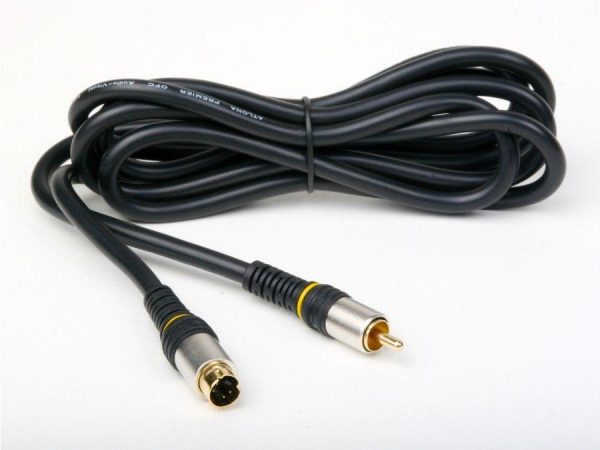
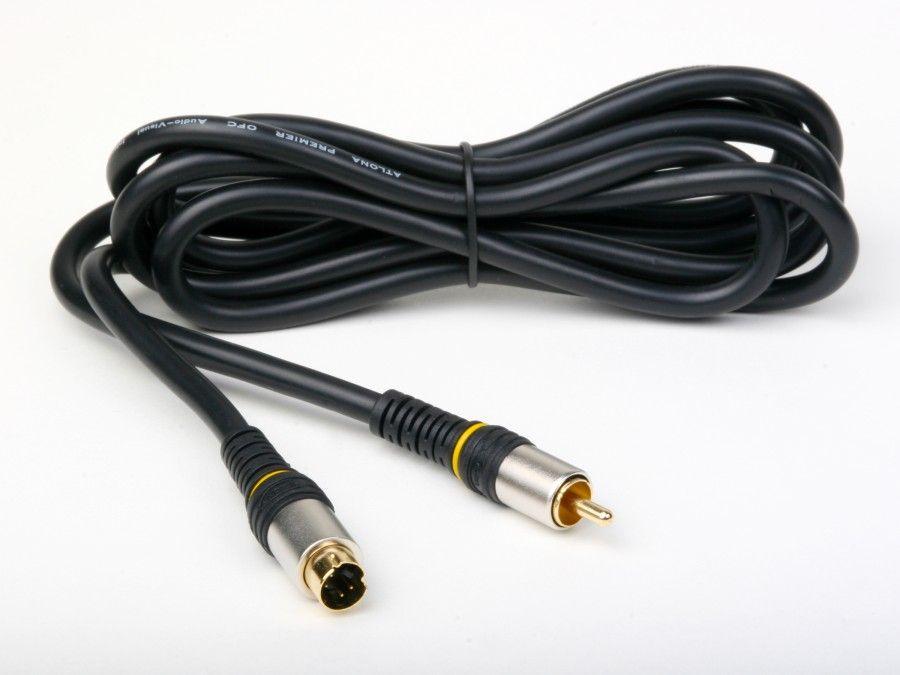
Composite cables, also known as RCA cables, are electrical connectors used to carry audio and video signals between consumer and commercial AV equipment. The RCA connector was introduced by the Radio Corporation of America in the 1940s and has been the universal consumer audio/video interconnect ever since. Today RCA connectors are commonly found on the back of AV equipment, camcorders, DVD players, gaming consoles, TVs, satellite and cable boxes, and many other AV components.
A typical composite AV cable carries three signals on three RCA connectors color-coded yellow (composite video), red (right audio), and white (left audio). The video signal combines brightness, color, and sync onto a single wire, giving SD resolution video (about 720x480 NTSC or 720x576 PAL). The audio is two channels of analog stereo line-level audio. This three-connector cable is sometimes called a "composite AV cable" or simply an "RCA cable" in consumer contexts.
RCA connectors carry many other signals beyond composite AV. Digital audio (SPDIF coaxial) uses a single RCA connector for digital stereo or compressed multi-channel audio. Component video uses three RCA connectors (red, blue, green) for analog HD video. Loudspeaker connections sometimes use RCA on consumer gear (though more often binding posts or banana plugs). The same connector physically appears in many roles in AV; the cable inside, the impedance, and the intended signal differ.
Composite video on RCA is electrically robust and tolerant of long runs: 100 meters or more on quality 75-ohm coaxial cable, far more than most other analog video formats. This makes RCA composite the workhorse for security CCTV cameras to monitor walls, where runs may be hundreds of feet. Analog stereo audio on RCA is less tolerant: 5 to 10 meters is the practical limit before noise pickup becomes audible.
Composite video comes in regional standards. NTSC is used in North America, Japan, and parts of South America. PAL is the standard in most of Europe, Australia, much of Asia, Africa, and South America. SECAM remains in use in France and parts of Eastern Europe and Africa. The standard must match end-to-end: sources, distribution gear, and displays must all speak the same one. Modern displays often auto-detect NTSC and PAL, but always verify before deploying.
Composite (RCA) AV cables are still widely used in security and CCTV (analog cameras to recorders and monitor walls), retro gaming (preserving the look of original consoles on period CRT displays), legacy AV in hotels and bars, training and education with older video equipment, and any installation where existing equipment uses RCA. Even modern equipment often includes RCA connectors for backwards compatibility, since RCA remains the cheapest and most universal consumer interconnect.
RCA stands for Radio Corporation of America, the company that introduced the connector design in the 1940s for use in early consumer electronics. The connector was originally designed for internal connections in record players (the "phono" connector), and the name has stuck even though RCA Corporation no longer dominates the industry. Today, RCA connectors are the universal consumer audio/video interconnect found on equipment from countless manufacturers, used for composite video, stereo audio, digital audio, component video, and other signals.
RCA connectors physically carry many different signals depending on context. The most common are composite video (yellow connector, analog SD video), analog stereo audio (red and white connectors, line-level analog), and digital audio (SPDIF coaxial, using a single RCA connector). RCA is also used for component video (three connectors: red, blue, green for HD analog video), and occasionally for loudspeaker connections on consumer gear. The connector is the same in each case, but the cable construction, impedance, and intended signal differ. Always match the cable to the intended signal type.
100 meters (330 feet) or more on quality 75-ohm coaxial cable. Composite video is electrically robust and far more tolerant of long runs than other analog video formats like component, VGA, or S-Video. This is one reason composite remains common in security CCTV installations, where cameras may be hundreds of feet from the monitor wall. Quality 75-ohm coax (RG-59 or RG-6) extends the practical limit even further. For analog stereo audio on RCA, the practical limit is much shorter, typically 5 to 10 meters before noise pickup becomes audible.
The color coding is the consumer AV convention for composite video plus stereo audio. Yellow is composite video. Red is right channel audio. White (or sometimes black) is left channel audio. This three-cable bundle is the standard consumer AV interconnect, used on countless DVD players, cable boxes, gaming consoles, camcorders, and older TVs. Always match colors at both ends to avoid swapping channels (which would cause stereo image reversal) or connecting audio to video (which gives no picture and no sound).
Only if the cable is specifically rated for digital coaxial audio (SPDIF), which is a 75-ohm cable similar to composite video. The connectors look identical to analog RCA audio (red and white), but the cable's electrical specifications matter. A cable made for analog audio may or may not work for digital SPDIF, depending on its construction. For short runs (a meter or two), an analog RCA cable often works for digital audio. For longer runs or higher sample rates, mismatched impedance can cause dropouts or signal loss. Use a cable explicitly rated for digital coaxial audio when you can.
Security and CCTV (the workhorse interconnect for analog cameras to recorders and monitor walls; the long-run tolerance of composite over coax is unmatched among analog video formats), retro gaming (period consoles on CRT displays for authenticity), legacy AV in hotels and bars (older infrastructure that has not been upgraded), training and educational facilities with VHS and DVD source material, museum exhibits using period AV equipment, hospitality AV with older set-top boxes, and the consumer market generally (modern AV receivers, TVs, and budget equipment all still include RCA for backwards compatibility).

On order over $300 and more for US and US territory

We Offer a 30-Day Money Back Guarantee

Full manufacturer's warranty and quality assurance

Safe checkout with trusted payment providers