




Start typing to see results...
Find the perfect solution
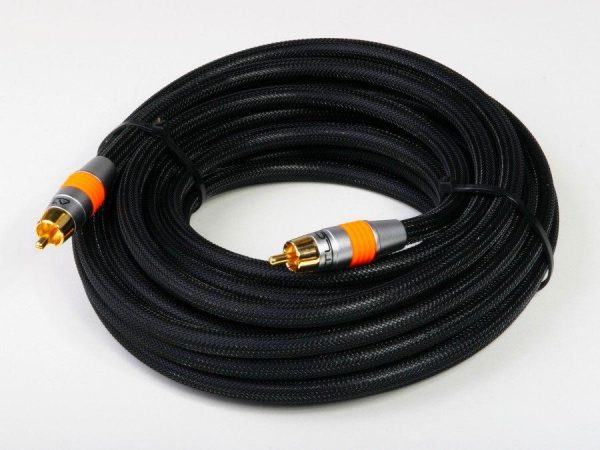
A digital coaxial audio cable carries digital audio data (the SPDIF protocol, also called IEC 60958) between devices over a single shielded coaxial cable terminated with RCA connectors. It is one of the two common consumer digital audio interfaces, alongside TOSLINK optical. The cable carries stereo PCM audio (CD-quality) and compressed multi-channel formats (Dolby Digital, DTS) in the same way TOSLINK does, but as an electrical signal on copper rather than light through fiber.
Both carry the same SPDIF data, with the same audio formats and quality. The difference is the physical medium. Coaxial uses a 75-ohm RCA cable (often the same physical cable used for analog composite video); the connection is electrical and can carry signals further than TOSLINK before degrading. TOSLINK uses plastic optical fiber; it is immune to electrical interference and ground loops, but limited in length to about 5 to 10 meters without optical repeaters. Many devices include both connectors and you can pick based on the run length and noise environment.
SPDIF carries up to two channels of PCM audio (uncompressed stereo) or compressed multi-channel audio (Dolby Digital 5.1, DTS 5.1) for older formats, but does not have the bandwidth for uncompressed multi-channel audio (Dolby TrueHD, DTS-HD Master Audio). For uncompressed multi-channel, use HDMI instead. Sample rates of 44.1 kHz, 48 kHz, 88.2 kHz, 96 kHz, and 192 kHz are commonly supported, though high sample rates may require HDMI for full bandwidth.
Quality digital coaxial cable uses 75-ohm impedance throughout (matching the SPDIF specification), with proper shielding to reject electrical interference. Although digital audio is more tolerant of cable quality than analog, mismatched impedance or poor shielding can cause dropouts, clicks, or no signal at all. The cable looks similar to an analog RCA video cable, but a true digital coaxial cable is rated for the higher frequencies that SPDIF carries.
Digital coaxial audio is reliable to about 10 to 15 meters on quality cable, longer on premium 75-ohm coax. Beyond that distance, the signal may start to drop out or fail entirely. For longer runs, options include digital coaxial extenders, AES/EBU on XLR balanced (which goes further on balanced cable), or a networked audio system if many channels are needed. In a typical commercial install, the digital coaxial run is short (between a source and an AV receiver or processor) and length is not an issue.
Digital coaxial audio is widely used in home theater (Blu-ray players, cable boxes, and gaming consoles to AV receivers), AV receivers and processors, soundbars, CD players, and any commercial AV installation where digital audio needs to travel from a source to a downstream processor. It is especially common between an HDMI audio extractor and an audio amplifier or mixer when the goal is to bring HDMI audio into an audio chain that uses SPDIF.
Both carry the same SPDIF digital audio protocol with the same audio formats (PCM stereo, Dolby Digital, DTS) and the same audio quality. The difference is the physical medium. Coaxial uses a 75-ohm RCA cable carrying an electrical signal on copper; TOSLINK uses plastic optical fiber carrying light. Coaxial is more tolerant of cable length (10 to 15 meters typically, vs. 5 to 10 for TOSLINK) and reuses the same RCA connectors as analog audio, which makes it more universal. TOSLINK is immune to electrical interference and ground loops, which makes it the better choice when isolating equipment grounds or eliminating noise.
Yes, for compressed surround formats. SPDIF (the protocol that digital coaxial carries) supports Dolby Digital 5.1 and DTS 5.1, both of which are compressed multi-channel surround formats used on Blu-ray, DVD, and many streaming services. SPDIF does not have the bandwidth for uncompressed multi-channel audio like Dolby TrueHD or DTS-HD Master Audio: for those formats, you need HDMI between the source and AV receiver. So digital coaxial is fine for everyday surround sound but limits you to compressed formats.
In short runs, often it works; in long runs or where quality matters, no. A true digital coaxial cable is rated for 75-ohm impedance throughout, with proper shielding for the higher frequencies SPDIF carries. A standard analog RCA cable may or may not meet these specifications, depending on its construction. For short runs (a meter or two), an analog RCA cable usually works fine. For longer runs or higher sample rates, mismatched impedance can cause dropouts or no signal. The safest practice is to use cable rated for digital coaxial when carrying SPDIF.
SPDIF supports stereo PCM at 44.1 kHz, 48 kHz, 88.2 kHz, 96 kHz, and 192 kHz; and compressed multi-channel formats including Dolby Digital 5.1 and DTS 5.1. It does not support uncompressed multi-channel formats (Dolby TrueHD, DTS-HD Master Audio, Atmos), which require HDMI. Some devices may have practical limits below the theoretical SPDIF maximum: for example, some AV receivers accept 192 kHz on optical but only 96 kHz on coaxial, or vice versa. Always check the manufacturer's specifications.
About 10 to 15 meters on quality 75-ohm cable, longer on premium cable with proper shielding. Beyond that distance, the signal may start to drop out, click, or fail entirely. For longer runs, options include digital coaxial extenders that regenerate the signal at the destination, AES/EBU on balanced XLR (which is a similar digital format but on balanced cable, going much further), or a networked audio system (Dante, AES67) if many channels are involved. In most home theater and commercial AV installs, the run is short (source to receiver in the same equipment rack) and length is not an issue.
Home theater (Blu-ray, gaming console, cable box, and streaming device to AV receiver), AV receivers (the central audio hub in most home and many commercial systems), soundbars, CD players, satellite and cable boxes, and commercial AV installations where digital audio needs to travel from a source to a downstream processor. A common pro AV use is bringing HDMI audio into an audio mixer or amplifier chain: an HDMI audio extractor outputs SPDIF coaxial, which then feeds the audio system without needing analog conversion.

On order over $300 and more for US and US territory

We Offer a 30-Day Money Back Guarantee

Full manufacturer's warranty and quality assurance

Safe checkout with trusted payment providers