




Start typing to see results...
Find the perfect solution
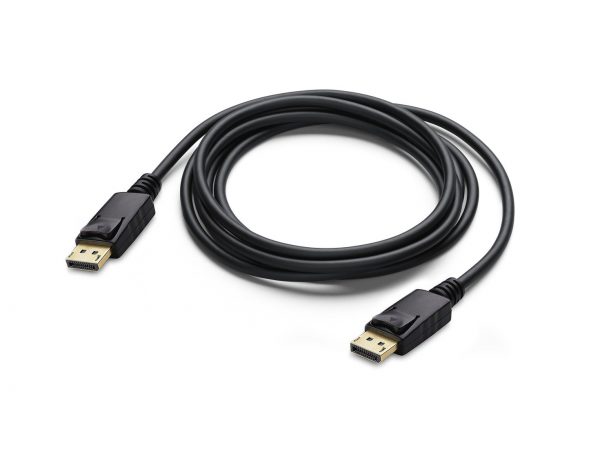
Audio cables carry sound signals between audio equipment, in many applications including home theaters, live events, music studios, broadcast facilities, and any residential or commercial AV system that handles audio. Unlike speaker cables (which carry the amplified output to passive loudspeakers), audio interconnect cables carry low-voltage line-level or mic-level signals between sources, processors, mixers, amplifiers, and powered speakers.
Audio cables come in many connector formats. TRS (Tip-Ring-Sleeve, typically 6.3 mm 1/4-inch or 3.5 mm) handles line-level and headphone signals, balanced or unbalanced. RCA (consumer phono) carries unbalanced stereo line-level audio and digital SPDIF coaxial. XLR is the professional balanced standard for microphones, line-level interconnects, and powered speaker inputs. TOSLINK is digital optical audio. Banana plugs, spade lugs, and speaker pins terminate speaker cables. Each connector has its own use case, signal level, and cable construction.
Balanced audio cables (XLR, TRS) use three conductors (positive signal, negative signal, ground) and cancel out electrical noise picked up along the cable run. They are the standard in pro audio, broadcast, and any installation with cable runs longer than a few meters or near electrical noise sources. Unbalanced cables (RCA, TS) use two conductors and work fine for short runs in clean environments. The difference is most noticeable on long runs in noisy environments, where balanced cables stay quiet and unbalanced cables pick up hum and buzz.
Most audio cables in this category are analog: they carry electrical waveforms that directly represent the audio. Digital audio cables (SPDIF coax, TOSLINK optical, AES/EBU XLR) carry the audio as encoded digital data, which is immune to cable degradation up to a clear distance limit but requires compatible equipment on both ends. Analog connections are universal and forgiving; digital connections are higher-fidelity and noise-immune but require strict compatibility.
Quality matters more in audio cable than in many people expect, especially for long runs or balanced applications. Look for cables with proper shielding (foil and braid for the highest noise immunity), oxygen-free copper conductors, and rugged connectors with strain relief. Cheap audio cables often fail at the connector after repeated flexing, or pick up noise on long runs. For commercial installations, buy quality cable from established manufacturers.
Audio cables connect every part of an audio system. In home theater, RCA cables run from sources to AV receivers, and balanced XLR or TRS may run to powered speakers. In live sound, XLR cables run microphones to mixers and balanced TRS or XLR runs mixers to amplifiers and powered speakers. In broadcast, XLR is universal for microphones and analog interconnects. In studios, balanced TRS and XLR dominate for outboard processing and patch bays. In residential whole-home audio, RCA, TOSLINK, and balanced runs all appear depending on the equipment.
Balanced cables (XLR, TRS) use three conductors (positive signal, negative signal, ground) and cancel out electrical interference picked up along the cable run. They are standard in pro audio, broadcast, and any installation with cable runs longer than a few meters or near sources of electrical noise (fluorescent lights, AC motors, dimmers). Unbalanced cables (RCA, TS) use two conductors and are universal on consumer equipment, fine for short runs in clean environments. The difference is most noticeable on long runs and in noisy environments: balanced cables stay quiet at 100+ feet, unbalanced cables pick up audible hum at much shorter distances.
Use XLR for professional balanced audio: microphones, line-level interconnects in pro studios and live sound, and powered speaker inputs. XLR connectors lock in place, are rugged, and carry balanced signals with the best noise rejection. Use TRS (1/4-inch or 3.5 mm Tip-Ring-Sleeve) for line-level audio in mixers, instruments (some are TS, not TRS), headphones, and balanced or unbalanced equipment. Use RCA for consumer audio interconnects (CD players, AV receivers, turntable line outputs) and for SPDIF coaxial digital audio. In commercial AV, you often need adapter cables to bridge between these formats.
Analog audio cables (XLR, TRS, RCA) carry the audio signal as a continuous electrical waveform that directly represents the sound. Digital audio cables (SPDIF coax, TOSLINK optical, AES/EBU XLR) carry the audio as encoded digital data. Analog connections work between any two devices with the right connector and signal level, with quality degrading slightly over distance. Digital connections require both endpoints to support the same format and sample rate, but are immune to cable degradation up to a clear distance limit. For short runs, the audible difference is small; for long runs or critical applications, digital is more reliable.
TOSLINK is a digital optical audio cable that uses light through a plastic fiber to carry stereo or multi-channel digital audio. The cable is immune to electrical interference and ground loops because there is no electrical connection between sender and receiver. TOSLINK is common on AV receivers, TVs, soundbars, and digital sources. Use TOSLINK when both endpoints support it and electrical isolation matters (eliminating ground loops, isolating equipment grounds across rooms). The trade-off is that TOSLINK is limited in length (typically 5 to 10 meters without optical amplification) and the cable cannot be bent sharply.
Unbalanced cables (RCA, TS) are reliable to about 5 to 10 meters in clean environments, less in noisy ones. Balanced cables (XLR, TRS) are reliable to 100 meters or more on quality cable, even in noisy environments, which is why they dominate pro audio. For runs longer than balanced cable can handle reliably, use a line-level distribution amplifier, an audio extender (over CAT5/6 or fiber), or a networked audio system (Dante, AES67). Cable quality matters: cheap cables fail much sooner than the theoretical limit suggests, especially in environments with electrical interference.
Live sound (XLR microphone cables, balanced line-level interconnects to amplifiers and powered speakers), broadcast and recording studios (XLR for microphones, balanced TRS for line-level patch bays and outboard processing), houses of worship (balanced cabling for the platform-to-rack runs, plus loudspeaker cables), conference rooms (balanced microphone runs, line-level audio between the codec and amplifier or mixer), residential AV systems (RCA, TOSLINK, and increasingly balanced audio in high-end systems), and any installation where audio signals need to be reliably interconnected with low noise.

On order over $300 and more for US and US territory

We Offer a 30-Day Money Back Guarantee

Full manufacturer's warranty and quality assurance

Safe checkout with trusted payment providers