




Start typing to see results...
Find the perfect solution
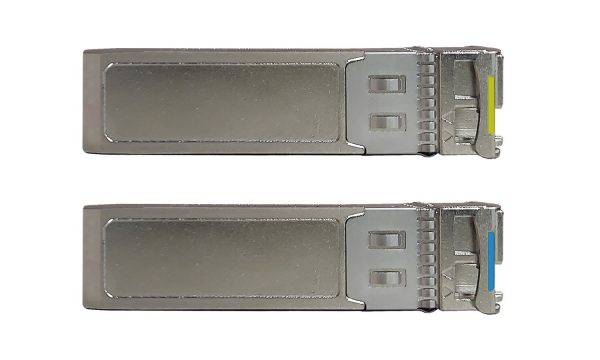
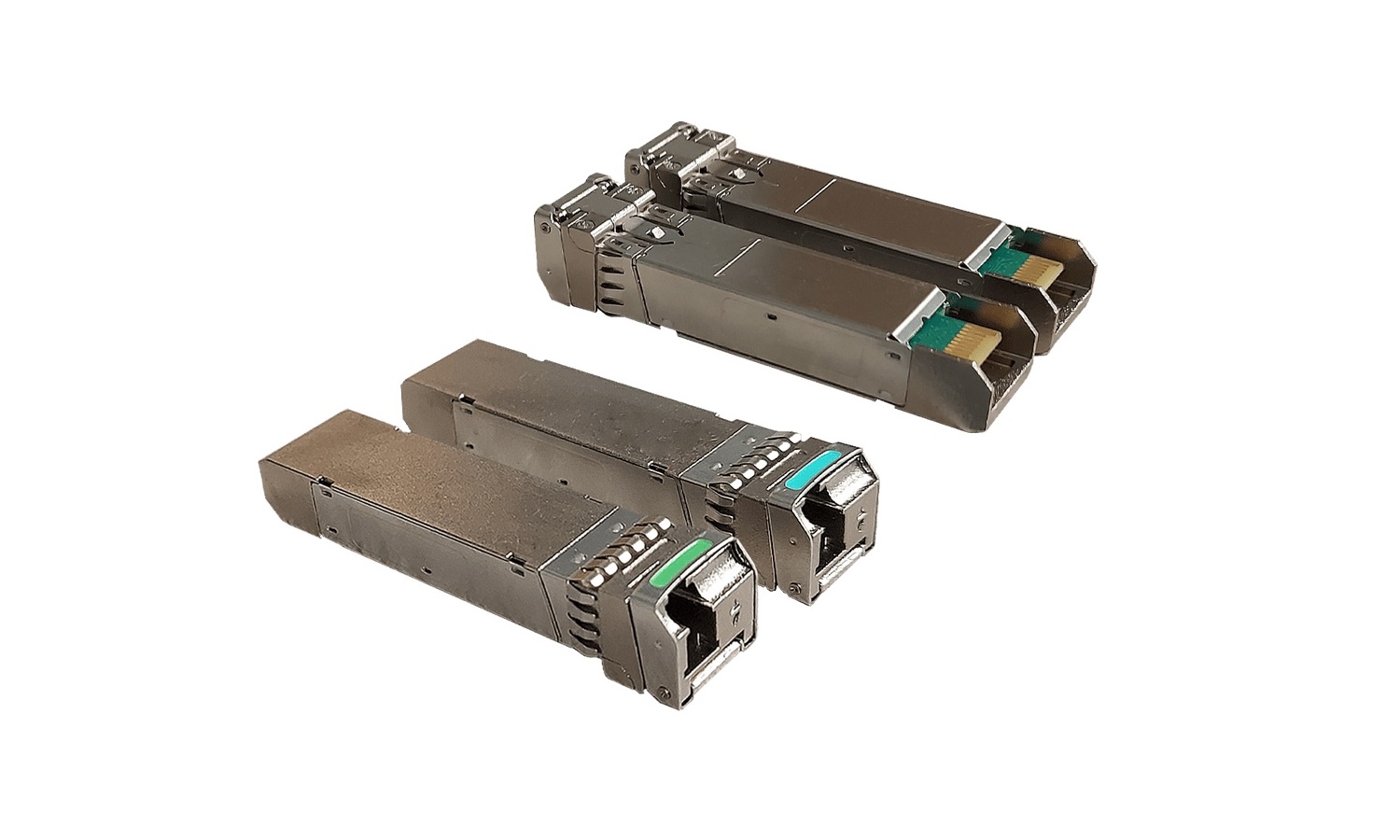
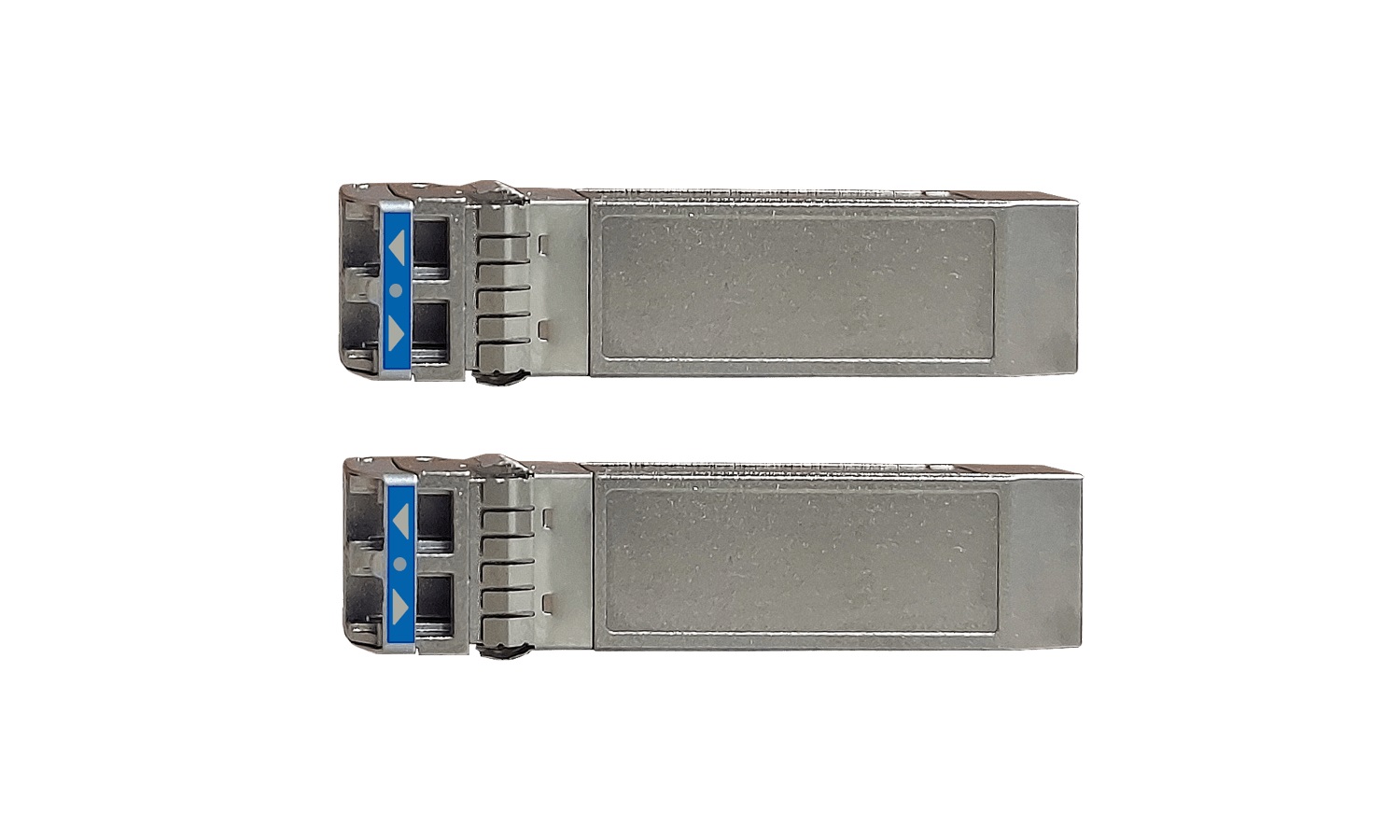
Fiber optic modules are small pluggable transceivers that fit into ports on network switches, AV-over-IP encoders and decoders, and other equipment, adding fiber optic connectivity where the chassis ships with empty slots. The module determines exactly what the port supports: which fiber type (single-mode or multimode), which connector style (LC, SC, ST), and which data rate (1 Gbps, 10 Gbps, 25 Gbps, 40 Gbps, or 100 Gbps). This modular approach lets one chassis serve different installation needs by changing modules rather than replacing equipment.
The most common module form factors are SFP (Small Form-factor Pluggable, 1 Gbps), SFP+ (10 Gbps), SFP28 (25 Gbps), QSFP+ (40 Gbps), and QSFP28 (100 Gbps). Each form factor is a physical standard, and the port on the chassis must match. An SFP+ port accepts SFP+ modules and is often backward-compatible with SFP. QSFP ports accept QSFP modules. Always match module to port type, and verify that the chassis supports the specific module model on its hardware compatibility list.
Single-mode fiber has a very thin core (about 9 microns) and carries light as a single mode, supporting much longer distances (10 km or more) but requiring more expensive lasers in the transceivers. Multimode fiber has a wider core (50 or 62.5 microns) and supports many light modes, with shorter range (typically up to 300 to 500 meters at 10 Gbps) but cheaper transceivers. For runs within a building, multimode is usually the right choice; for runs between buildings, between campuses, or across a city, single-mode is essential.
LC connectors are the most common in modern installations: small, dense, and easy to terminate with field-installable connectors. SC connectors are older, larger, and still found in legacy installations. ST connectors are older still, with a bayonet locking mechanism. Always match the connector at the patch panel, wall plate, or device to the module. Most modern fiber modules use LC duplex (two LC connectors side by side, one for transmit and one for receive).
An Active Optical Cable (AOC) is a fiber cable with transceivers permanently attached at each end, sold as a single unit. AOCs are simpler than separate modules plus fiber because there is no field termination and no module compatibility checking; they just plug in. The trade-off is fixed length and no field repair. For permanent installations with planned routing, modules plus separate fiber patch cables offer more flexibility; for direct point-to-point runs of standard length, AOCs are often easier.
Fiber optic modules are essential in AV-over-IP installations where the encoder, decoder, or network switch needs fiber connectivity for long runs or high bandwidth. They are also standard in IT and data-center networking, where fiber is the default backbone. Specific use cases include connecting two buildings on a campus, running 10 GbE backbone between equipment rooms, distributing 4K video over an AV-over-IP network across a large venue, and integrating AV systems with existing fiber infrastructure.
SFP, SFP+, and QSFP are physical form factor standards for pluggable fiber optic modules. SFP (Small Form-factor Pluggable) supports 1 Gbps. SFP+ supports 10 Gbps using the same physical form factor as SFP; many SFP+ ports are backward compatible with SFP. QSFP+ (Quad SFP) supports 40 Gbps, and QSFP28 supports 100 Gbps. The form factor must match the port on the chassis: an SFP+ module fits an SFP+ port, a QSFP module fits a QSFP port. Always check the chassis hardware compatibility list to verify your specific module is supported.
Choose multimode for runs within a building (typically under 500 meters) where cost matters more than absolute range. Multimode fiber and transceivers are cheaper, the cable is more tolerant of bending and field termination, and the range is usually adequate. Choose single-mode for runs between buildings, across a campus, or across a city. Single-mode supports 10 km or more easily and 80+ km with the right transceivers, but transceivers cost significantly more and the cable is less tolerant of bending. Most AV installations within one building use multimode; cross-building or cross-campus runs use single-mode.
LC and SC are the two most common fiber connector types. LC connectors are smaller (about half the size of SC), denser, and dominate modern installations because they fit more ports into the same panel space. SC connectors are larger, older, and still found in many legacy installations. Most modern fiber modules use LC duplex (two LC connectors side by side, one for transmit, one for receive). When buying a module, the LC vs. SC choice must match the connectors on your patch panel, wall plate, or equipment; mismatches require adapter cables.
An AOC is a fiber optic cable with transceivers permanently attached at both ends, sold as one complete unit at a fixed length (typically 1, 3, 5, 10, 30 meters). AOCs are simpler than separate modules and fiber because there is no field termination, no module compatibility checking, and no mating of separate components: they just plug in. The trade-off is fixed length and no field repair (if anything fails, the entire cable is replaced). AOCs are great for direct point-to-point links of standard length; for permanent installations with custom-length runs and patch panels, separate modules plus field-terminated fiber are more flexible.
Start with the requirements: bandwidth (1 Gbps for HD, 10 Gbps or higher for 4K and multi-channel), distance (which determines single-mode vs. multimode), and the chassis you are connecting (which determines the form factor and the supported module list). Match the connector type at both ends to your existing fiber plant. Then verify the module is on the chassis manufacturer's hardware compatibility list (HCL): some chassis only accept modules from specific manufacturers, and a "compatible" third-party module may not work or may void warranty.
AV-over-IP installations (encoders, decoders, and network switches with fiber connectivity for long runs or high bandwidth), large-venue audio and video distribution (one fiber backbone serving distributed AV racks), cross-building campus installations (one fiber pair carrying many AV channels between buildings), broadcast and live sound facilities (fiber tie lines between control rooms, stages, and trucks), data centers and IT infrastructure (where fiber is the default), and any installation where the bandwidth, distance, or noise immunity of fiber matters more than the cost over copper.

On order over $300 and more for US and US territory

We Offer a 30-Day Money Back Guarantee

Full manufacturer's warranty and quality assurance

Safe checkout with trusted payment providers