




Start typing to see results...
Find the perfect solution
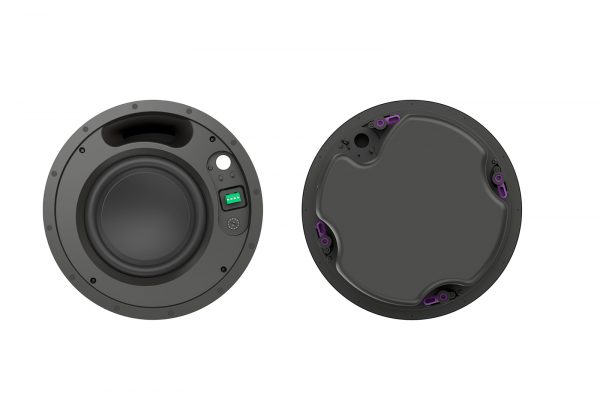
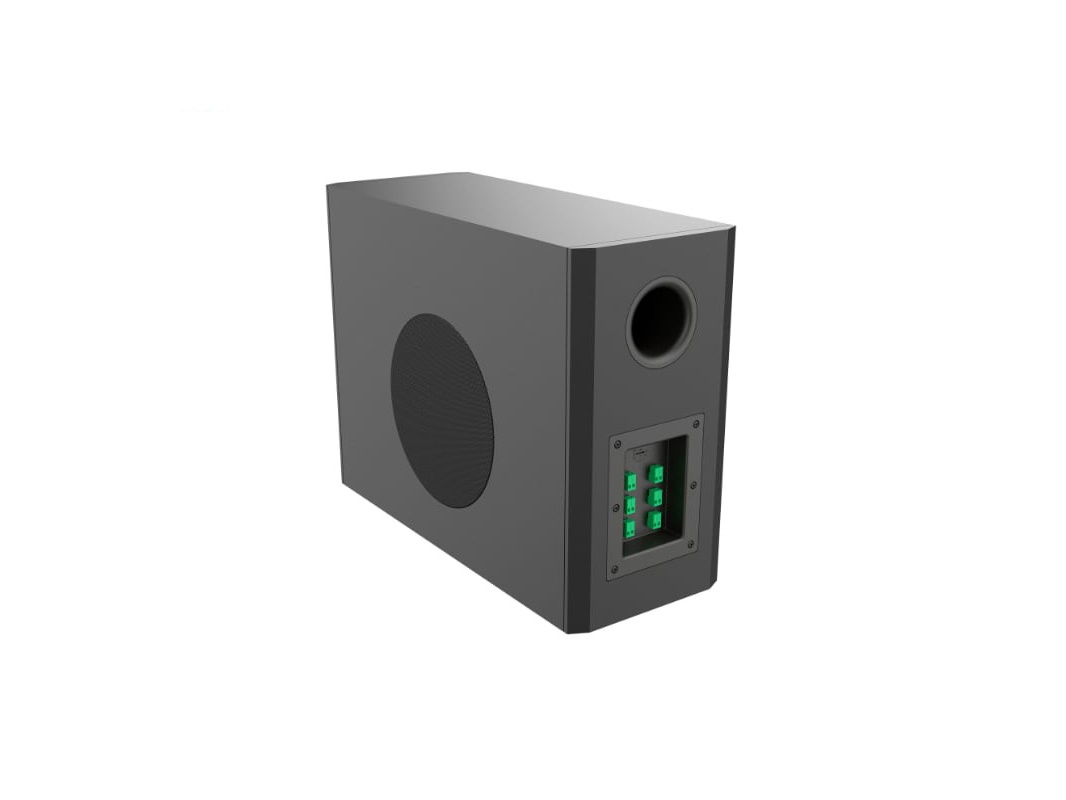
A subwoofer is a specialized speaker designed to reproduce the lowest frequencies in the audio spectrum, typically below 80 Hz down to 20 Hz or lower. Standard speakers can reproduce mid and high frequencies clearly but struggle with deep bass, which requires large drivers, large cabinets, and substantial power. Adding a subwoofer to a system relieves the main speakers from low-frequency duty (extending their lifespan and improving clarity) and provides the visceral, body-felt bass that defines modern movies, music, and live sound.
Home theater subwoofers are typically powered (self-amplified) cabinets with an LFE (Low Frequency Effects) input that connects to the AV receiver's subwoofer output. They handle movie soundtrack effects (explosions, deep music, rumble) and low-frequency music content. Commercial subwoofers serve nightclubs, fitness studios, restaurants, retail spaces with full-range music, and any installation where bass is part of the experience. Live sound subwoofers are designed for portability, ground-stacking, or flying in arrays, with much higher output capability than home or commercial fixed-install subwoofers.
Sealed (acoustic suspension) subwoofers have a fully closed cabinet with no port. They provide tight, accurate bass response and are smaller for a given driver size, but with less efficiency. Ported (bass-reflex) subwoofers have a tuned vent that boosts output at low frequencies, providing more bass for the same amplifier power but with somewhat looser response. Most home and commercial subwoofers today are ported because the efficiency gain matters; high-end audiophile and reference systems may prefer sealed for the accuracy.
Subwoofer driver size ranges from 8 inches (small home installations, satellite-and-sub stereo) to 18 inches and beyond (live sound, large commercial venues). Larger drivers move more air at lower frequencies but require larger cabinets. Amplifier power ranges from 100 watts in entry-level home subwoofers to 1000+ watts in commercial and live sound applications. Match the subwoofer's capability to the room volume and the SPL (sound pressure level) needed.
The crossover sets the frequency at which the subwoofer takes over from the main speakers. A typical setting is 80 Hz: anything below 80 Hz goes to the sub, anything above to the main speakers. The crossover is set either at the AV receiver, in the subwoofer's own controls, or in a DSP processor. Proper integration requires phase alignment between the sub and the mains so the bass arrives in time; modern AV receivers and DSPs include automatic room correction that handles this.
Subwoofers are essential in home theater (movie soundtracks, action sequences, deep music), high-end residential audio (full-range stereo systems), commercial spaces with music focus (nightclubs, fitness studios, restaurants and bars with dance floors), live sound (rock concerts, electronic music, theatrical productions), houses of worship (modern services with contemporary music and band), broadcast monitoring (full-range reproduction for film and music mixing), and any installation where deep bass is part of the intended experience.
You need a subwoofer if you want to hear the lowest frequencies in your content properly. Movies, modern music, and live performance all include content well below the lowest frequencies that most main speakers can reproduce cleanly. Without a subwoofer, that content is either missing or reproduced poorly. In home theater, a subwoofer is essentially mandatory for the full experience. In music listening, a subwoofer makes the difference between hearing the bass line and feeling it. In commercial spaces with music programming, a subwoofer is critical for any environment where music matters: nightclubs, fitness, restaurants and bars with dance music.
Sealed (acoustic suspension) subwoofers have a fully closed cabinet, providing tight, accurate bass with very controlled response, but less output for a given amplifier power. They are smaller for the same driver size and good for music listening and home theater rooms where bass accuracy matters more than maximum output. Ported (bass-reflex) subwoofers have a tuned vent that boosts output at the tuning frequency, providing more bass for the same amplifier power, but with somewhat looser, less precise response. Ported designs dominate today because the efficiency gain matters in real rooms; sealed designs remain popular among audiophiles and in reference monitoring.
Driver size determines how much air the subwoofer can move at low frequencies, and that determines maximum SPL and how deep the bass goes. An 8-inch driver works in small rooms, satellite-and-sub stereo systems, and tight commercial spaces. A 10-inch driver suits most medium home theaters and small to medium commercial installations. A 12-inch driver is the workhorse size for serious home theater, residential dedicated listening rooms, restaurants and bars, fitness studios. A 15-inch or 18-inch driver suits large home theaters, live sound, and large commercial venues. Doubling up (two subs in a room) is often more effective than one larger sub, because two subs help even out the bass response across seats.
The crossover sets the frequency at which the subwoofer takes over from the main speakers. A typical setting is 80 Hz: anything below 80 Hz goes to the sub, anything above to the main speakers. The standard rule is to set the crossover about 10 Hz above the main speakers' lowest reliable frequency. So small bookshelf speakers that struggle below 70 Hz pair with an 80 Hz crossover; larger floor-standers good to 50 Hz pair with a 60 Hz crossover. Most modern AV receivers can measure your system and set the crossover automatically via room correction (Audyssey, YPAO, Dirac, etc.).
Two subwoofers in a room almost always sound better than one. The reason is room modes: every room has standing-wave patterns at low frequencies that make bass loud in some spots and quiet in others. One subwoofer reinforces those patterns. Two subwoofers placed asymmetrically (one near a front wall, one diagonally opposite, for example) cancel out many of those modes, resulting in much more even bass response across the seating area. The bass is also more articulate and feels more enveloping. Multiple subwoofers is standard practice in modern home theater and high-end audio installations.
Home theater (movie soundtracks, action sequences, deep music), high-end residential music systems (full-range stereo), commercial spaces with music focus (nightclubs, fitness studios, restaurants and bars with dance floors), live sound (rock concerts, electronic music, theatrical productions, festivals), houses of worship (modern services with contemporary music and full band), broadcast monitoring (full-range reproduction for film and music post-production), and any installation where deep bass below the main speakers' range is part of the intended experience.

On order over $300 and more for US and US territory

We Offer a 30-Day Money Back Guarantee

Full manufacturer's warranty and quality assurance

Safe checkout with trusted payment providers