




Start typing to see results...
Find the perfect solution
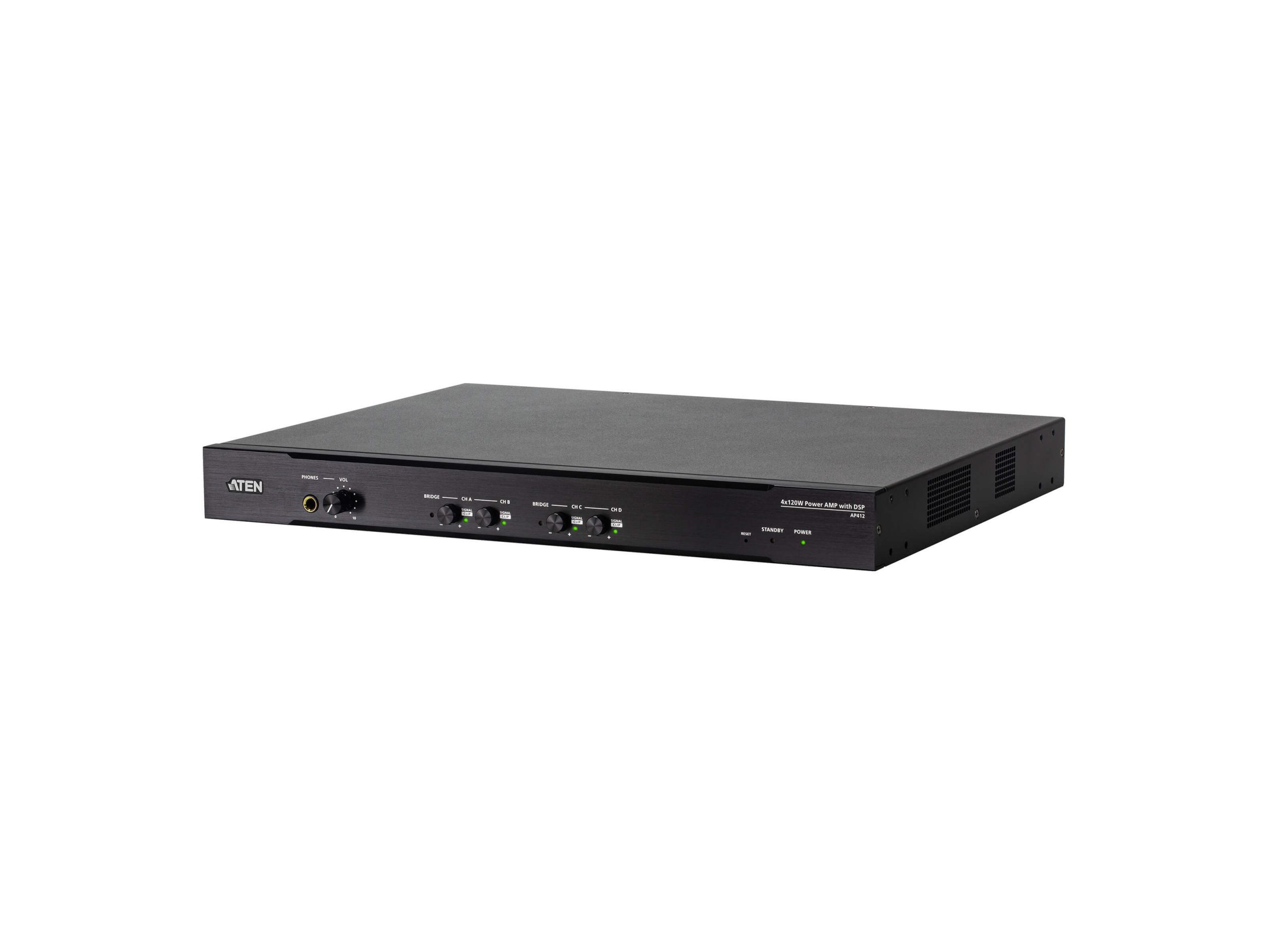
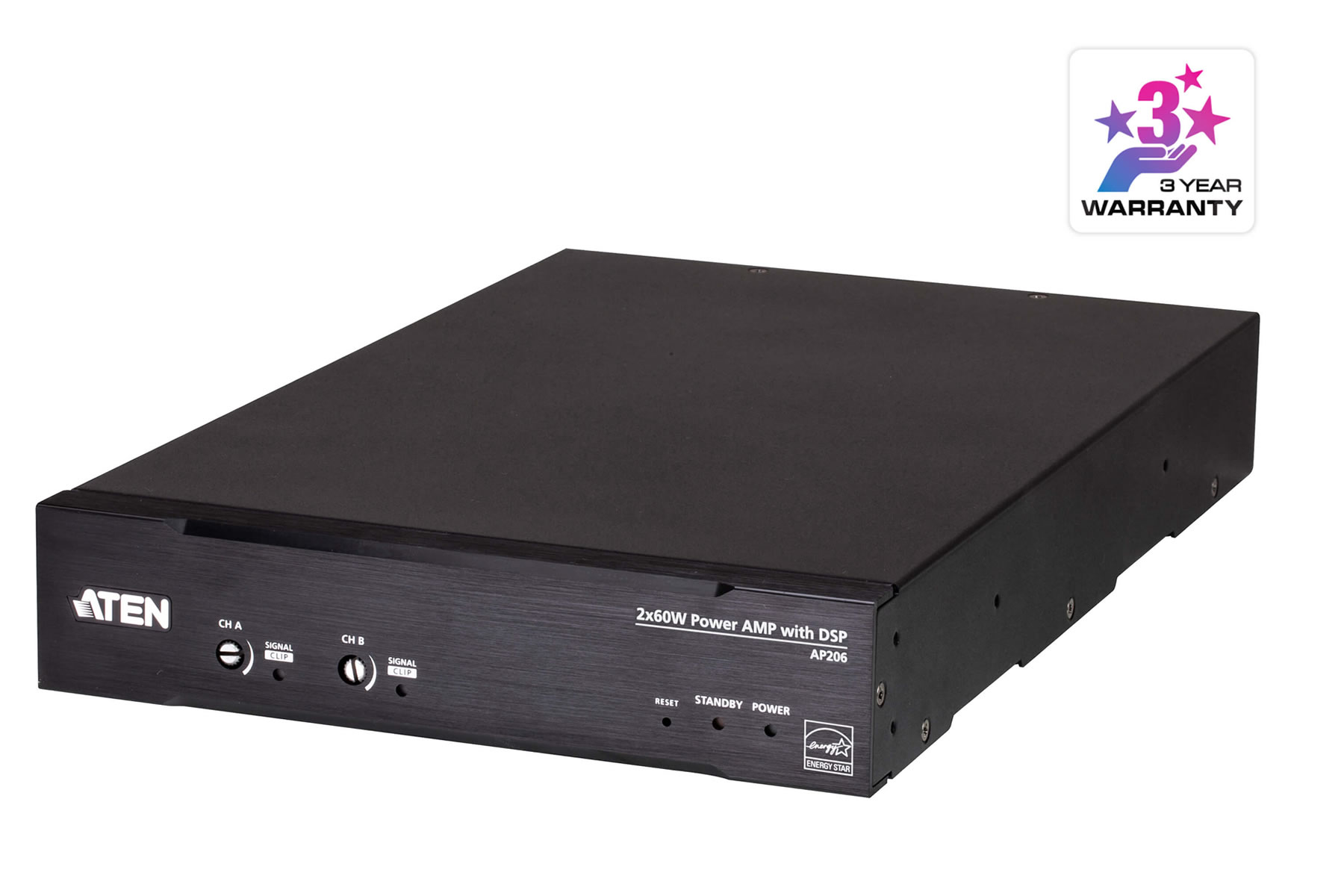
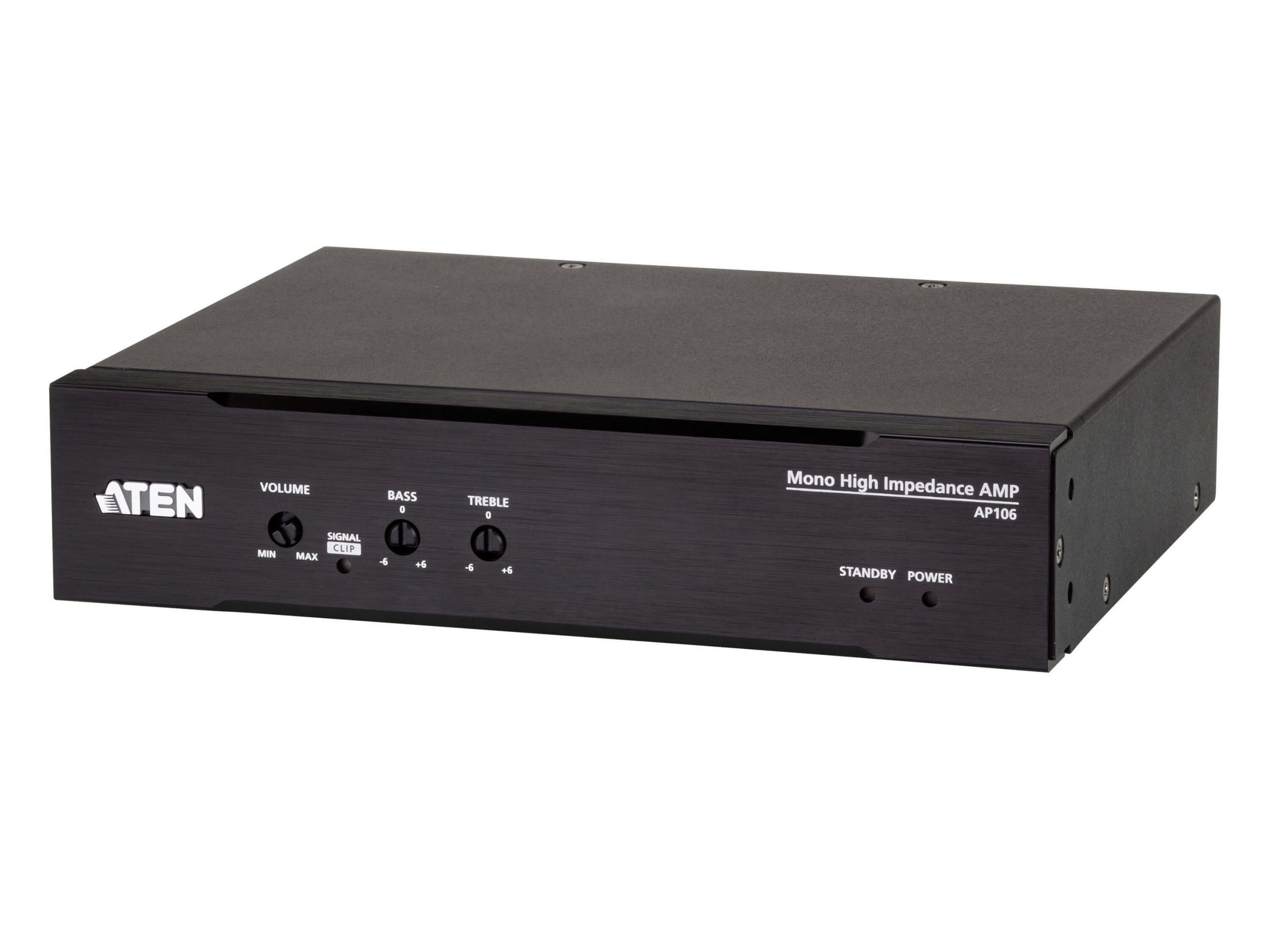
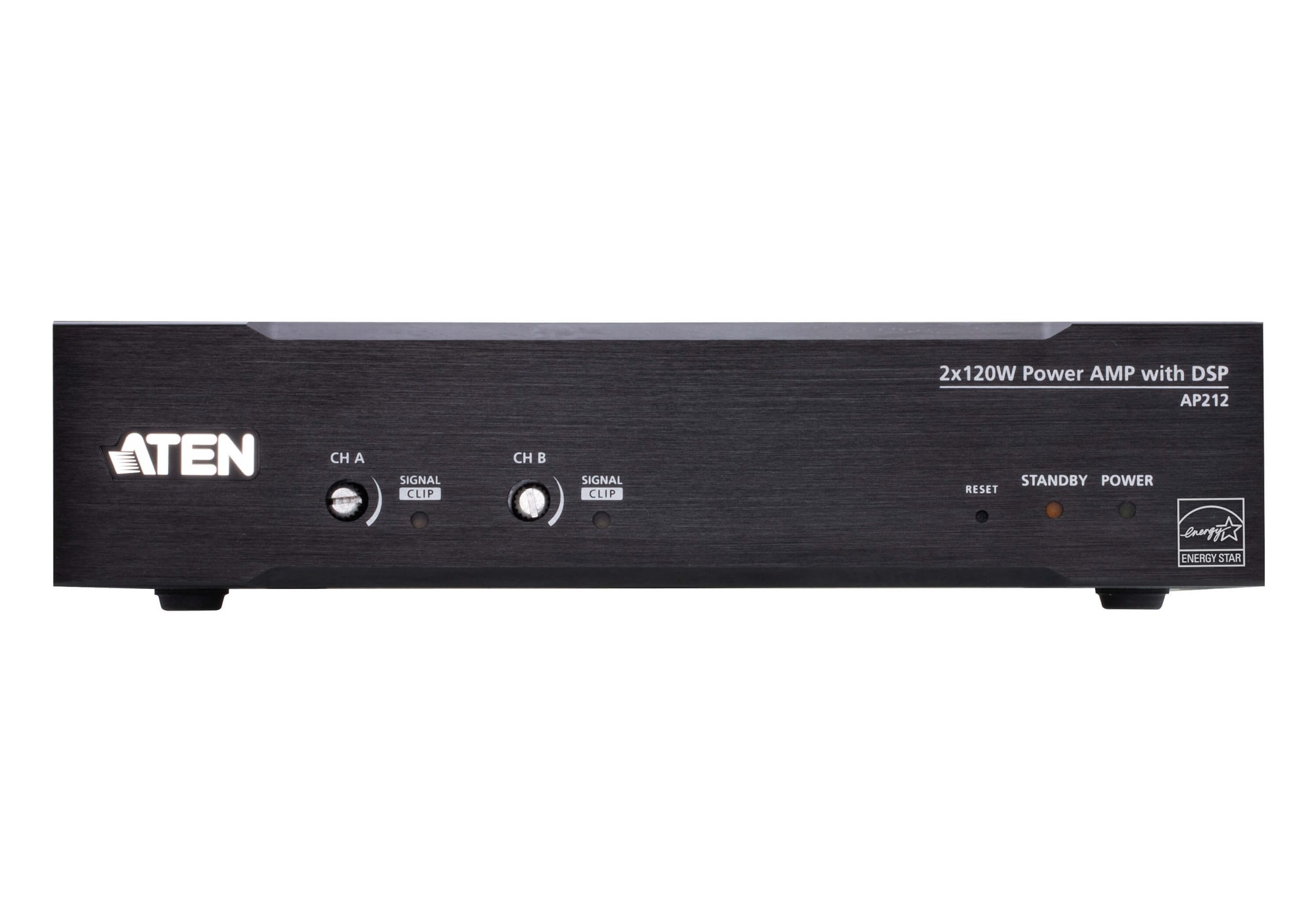
This category groups two related types of devices. Audio power amplifiers take a line-level audio signal from a source or preamp and boost it to the much higher power level needed to drive loudspeakers. Digital audio splitters take a single digital audio signal (SPDIF coax, TOSLINK optical, or AES/EBU) and distribute identical copies to multiple downstream destinations. Both are essential building blocks in distributed audio systems, from residential whole-home installations to commercial paging, background music, and live sound reinforcement.
Low-impedance power amplifiers drive 4 or 8 ohm speakers directly, with typical channel power ratings from 50 to 500 watts per channel. They are used in home theater, residential stereo, recording studios, and small commercial sound systems where speakers are close to the amplifier. 70V or 100V constant-voltage amplifiers produce a higher-voltage, lower-current output that can drive dozens of tapped speakers over long cable runs with minimal loss. They are the standard in commercial paging, background music, evacuation systems, and any large-scale distributed-audio install.
Most modern power amplifiers in this category use Class D switching topology, which is far more efficient than the older Class A or Class AB designs. Class D amplifiers run cooler, weigh less, fit in smaller chassis, and waste less power, which makes them ideal for rack-mounted commercial installations and for portable use. Digital networked amplifiers (Dante, AES67, AVB) extend this further by accepting audio over the network and decoding it in the amplifier itself.
Digital audio splitters take one SPDIF, TOSLINK, or AES/EBU input and distribute it to multiple outputs. They are useful when one digital audio source (for example, an HDMI audio extractor's SPDIF output) needs to feed several downstream devices such as multiple amplifiers, recorders, or zone controllers. Unlike analog splitters, digital audio splitters do not suffer from impedance-matching issues, but they do need clean clock recovery to avoid jitter on the outputs.
These devices appear in residential whole-home audio (one source driving speakers in many rooms), restaurants and retail (background music plus paging on a single amplifier infrastructure), schools and universities (paging, announcements, and emergency notification), houses of worship (live sound reinforcement and zone audio), broadcast and recording studios (monitoring and outboard processing), warehouses and industrial spaces (paging and zone announcements), and outdoor venues (live events, sports facilities, amusement parks).
A power amplifier only amplifies a line-level input signal to speaker level; it has no source selection, volume control, or tone shaping. An integrated amplifier combines a preamp (which selects sources and controls volume and tone) with a power amplifier in one chassis. Use a separate power amplifier when you want maximum sound quality (audiophile separates), when you need higher power than an integrated unit provides, when you need multiple amplifier channels for a multi-zone system, or in pro applications where the preamp and power amp are physically separated by long cable runs.
Match the amplifier's power rating to the speaker's recommended range, and confirm the amplifier is stable at the speaker's impedance. Speakers have a nominal impedance (4Ω, 6Ω, or 8Ω) and a power-handling spec (e.g., 50 to 200W RMS continuous). The amplifier should be stable at that impedance and deliver power within the speaker's recommended range. Generally err toward an amplifier with somewhat more power than the speaker's continuous rating, because running a small amp into clipping damages speakers more often than running a larger amp at moderate level.
70V and 100V audio are constant-voltage distribution systems used in commercial paging and background music installations. Standard low-impedance audio drives 4 to 8 ohm speakers over short cable runs. In a 70V or 100V system, the amplifier produces a higher-voltage, lower-current signal that can drive dozens of speakers tapped at different power levels (typically 0.5W, 1W, 2W, 5W, or 10W per speaker) over very long cable runs with minimal loss. This architecture is the standard in schools, retail spaces, restaurants, warehouses, hospitals, and any environment with distributed paging or background music across a large area.
The classes describe how the amplifier's output stage works internally, which affects efficiency, heat, and (according to some listeners) sound quality. Class A amplifiers always conduct current, which gives very low distortion but wastes most of the power as heat (efficiency under 25%). Class AB is a compromise that conducts only when needed, with efficiency around 50 to 65%; this is the traditional choice for high-end home audio. Class D uses high-speed switching for efficiency above 90%, runs cool, weighs little, and dominates modern commercial and portable installations. For most commercial AV and even most home theater, Class D is the right choice.
A digital audio splitter takes one digital audio input (SPDIF coax, TOSLINK optical, or AES/EBU) and clones it to multiple outputs, with the signal regenerated on each output so cable length to each destination doesn't affect quality. Use a digital audio splitter when one digital source (for example, the SPDIF output of an HDMI audio extractor, a CD player, or a DAW) needs to feed multiple downstream devices, such as several amplifiers in a multi-zone system, redundant recorders in a broadcast facility, or multiple processing chains in a studio.
Residential whole-home audio, home theater, restaurants and retail (background music plus paging), schools and universities (paging and announcements), houses of worship (live sound and zone audio), broadcast and recording studios, warehouses and industrial spaces (paging and zone announcements), and outdoor venues such as sports facilities and amusement parks. The specific architecture varies with the application: residential typically uses low-impedance Class D amplifiers feeding stereo speakers per room, while commercial uses 70V or 100V amplifiers feeding dozens of ceiling speakers tapped at low power levels.

On order over $300 and more for US and US territory

We Offer a 30-Day Money Back Guarantee

Full manufacturer's warranty and quality assurance

Safe checkout with trusted payment providers