




Start typing to see results...
Find the perfect solution
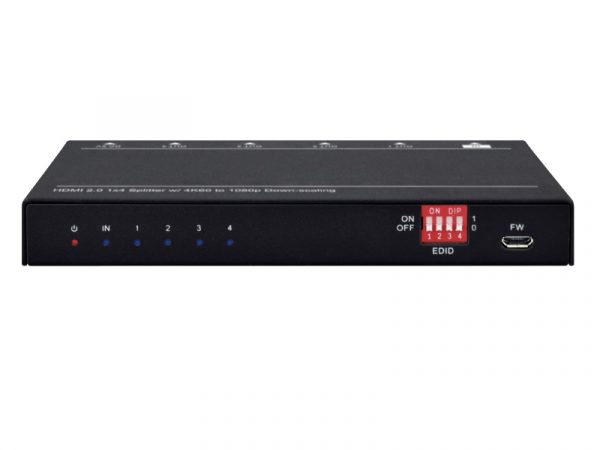
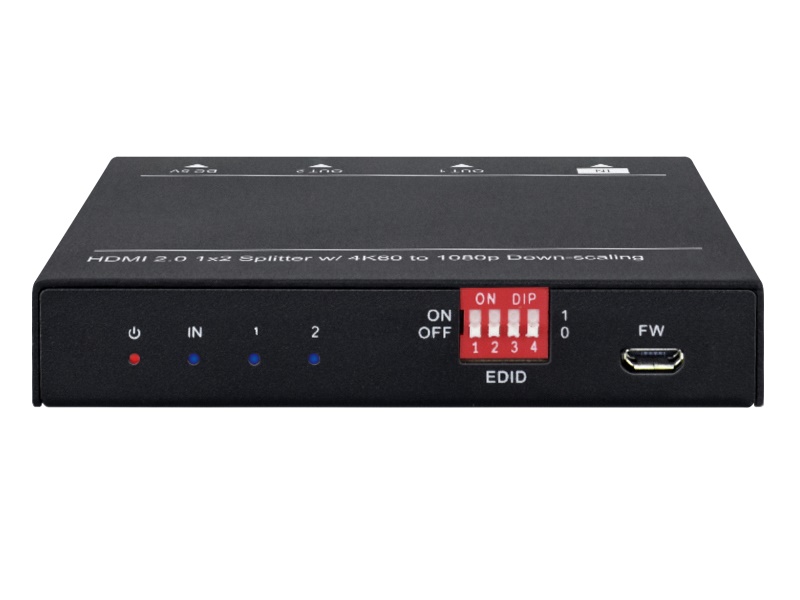
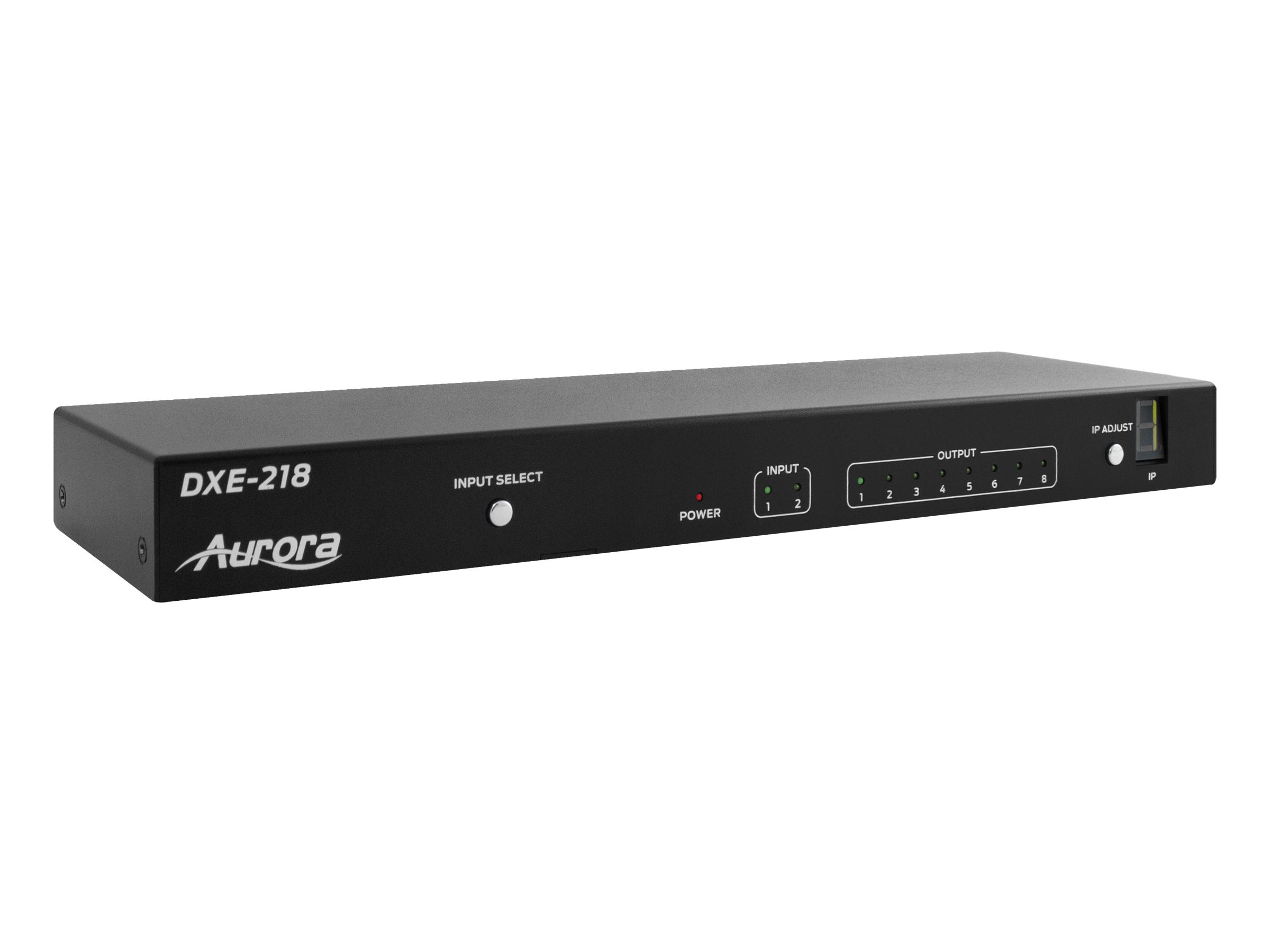
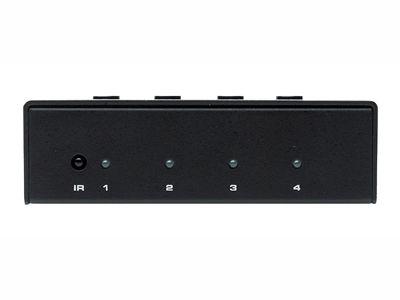
An HDMI distribution amplifier (also called an HDMI splitter) takes one HDMI source and produces multiple identical, full-quality copies of its signal, so the same picture and audio appear on many displays simultaneously. Unlike a passive splitter, a distribution amplifier actively re-clocks and boosts each output, ensuring every display receives a clean signal regardless of cable length, within the limits of the HDMI specification supported by the unit.
HDMI distribution amplifiers are engineered primarily for commercial AV environments. Typical deployments include sports bars and restaurants showing one game on every TV, gyms streaming a fitness channel to a wall of screens, casinos and stadiums distributing one feed across concourses, retail venues with synchronized digital signage, and houses of worship sending a single program output to multiple displays in the auditorium and overflow rooms. They are equally common in residential AV systems for whole-home video distribution.
Modern HDMI distribution amplifiers support 4K UHD resolution at 60 Hz with full 4:4:4 chroma, HDR pass-through, and HDCP 2.2 or 2.3 for protected content. Built-in EDID management ensures that when displays of different capabilities are connected, the source still receives a consistent EDID and outputs the correct resolution. Many units also support audio de-embedding, which extracts the audio from the HDMI stream and outputs it on a separate analog or SPDIF port for use with an external audio system.
When a single splitter does not provide enough outputs, distribution amplifiers can be cascaded. The output of one splitter feeds the input of another, allowing a single source to fan out to dozens of displays across an entire facility. When planning a cascade, verify that every device in the chain supports the same HDMI version, the same HDCP level, and consistent EDID handling, so that the signal survives the full path.
The key questions when selecting an HDMI distribution amplifier are: how many displays will it feed (1x2, 1x4, 1x8, 1x16), what resolution and HDR format the source produces, what HDCP version the source content requires, what the cable lengths are on each output leg, and whether audio de-embedding is needed. For long cable runs from the outputs, pair the splitter with HDBaseT or fiber HDMI extenders.
In practice these terms are used interchangeably for the same device. A passive HDMI splitter is technically possible at very short distances, but it degrades the signal too much to be useful in real installations. Every commercial-grade HDMI splitter on the market today is in fact an active distribution amplifier: it re-clocks the input, boosts each output, and ensures every connected display receives a clean copy of the signal regardless of cable length within HDMI specification.
A single distribution amplifier typically provides 2, 4, 8, or 16 outputs. Common form factors are 1x2 for residential use, 1x4 and 1x8 for typical commercial installs, and 1x16 for larger venues. Cascading extends the count further: feed the output of a 1x8 into the inputs of additional 1x4 or 1x8 units, and you can reach 32, 64, or even more synchronized displays from one source. Verify cumulative cable length, EDID consistency, and HDCP handshake across the chain.
Primarily it duplicates, but the active re-clocking can clean up minor jitter accumulated on the input cable. The picture quality at the splitter outputs cannot be better than what the source itself produces. However, if your input cable run is long and slightly degraded, an active splitter can regenerate a cleaner signal for the downstream displays. If outputs also need long cable runs, look for splitters with built-in equalization or pair them with HDMI extenders downstream.
Without EDID management, the source may default to the lowest common resolution supported by all displays in the chain. Imagine a 1x4 splitter feeding three 4K displays and one 1080p projector: the source reads EDID from each output and falls back to 1080p for everyone to avoid sending an unsupported signal. A splitter with EDID management can present a fixed preferred EDID to the source, so all 4K displays receive 4K, with the projector handling downscaling on its own or via a downstream scaler.
Every device in the path must support the right HDCP version, or protected content will not display. HDCP is the copy-protection handshake between source and display. If your splitter does not support the required HDCP version, the entire chain refuses to pass protected content from Blu-ray players, streaming devices, or set-top boxes. For 4K HDR content, HDCP 2.2 or 2.3 is required at every device in the chain. A non-compliant splitter, even one rated for 4K bandwidth, will produce a black screen when used with protected sources.
Sports bars, stadiums, gyms, casinos, houses of worship, retail spaces, and digital signage installations are the most common environments. Specific examples include a sports bar showing a single game on every TV in the venue, a stadium showing the live game feed on concourse displays, a gym streaming a fitness channel to a wall of screens, a casino floor distributing a marketing video to multiple displays, a retail store duplicating one media player across a row of menu boards, and a worship venue sending the main camera program to displays in the auditorium and overflow areas.
Yes, as long as bandwidth, HDCP, and EDID align across the entire chain. For example, feeding a 1x4 splitter's output into the input of another 1x4 gives you effectively 1x16 (using one of the first splitter's outputs for cascading and three for displays). Every device in the chain must support the same HDMI version and HDCP level, and total cable length should stay within spec for the resolution being distributed. Always test the full chain end-to-end with the actual sources and displays you intend to use, since cumulative latency or marginal cables can cause surprises.

On order over $300 and more for US and US territory

We Offer a 30-Day Money Back Guarantee

Full manufacturer's warranty and quality assurance

Safe checkout with trusted payment providers