




Start typing to see results...
Find the perfect solution
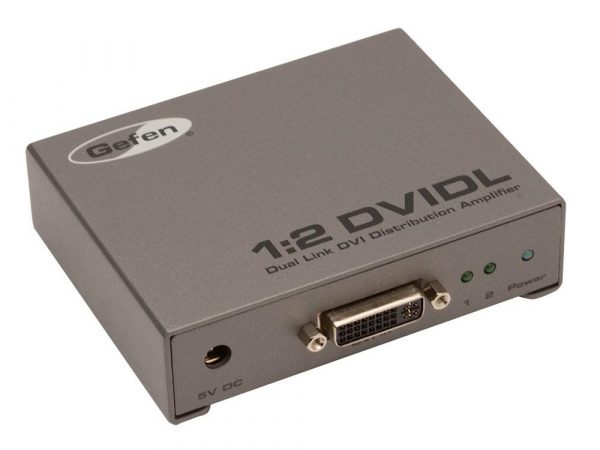
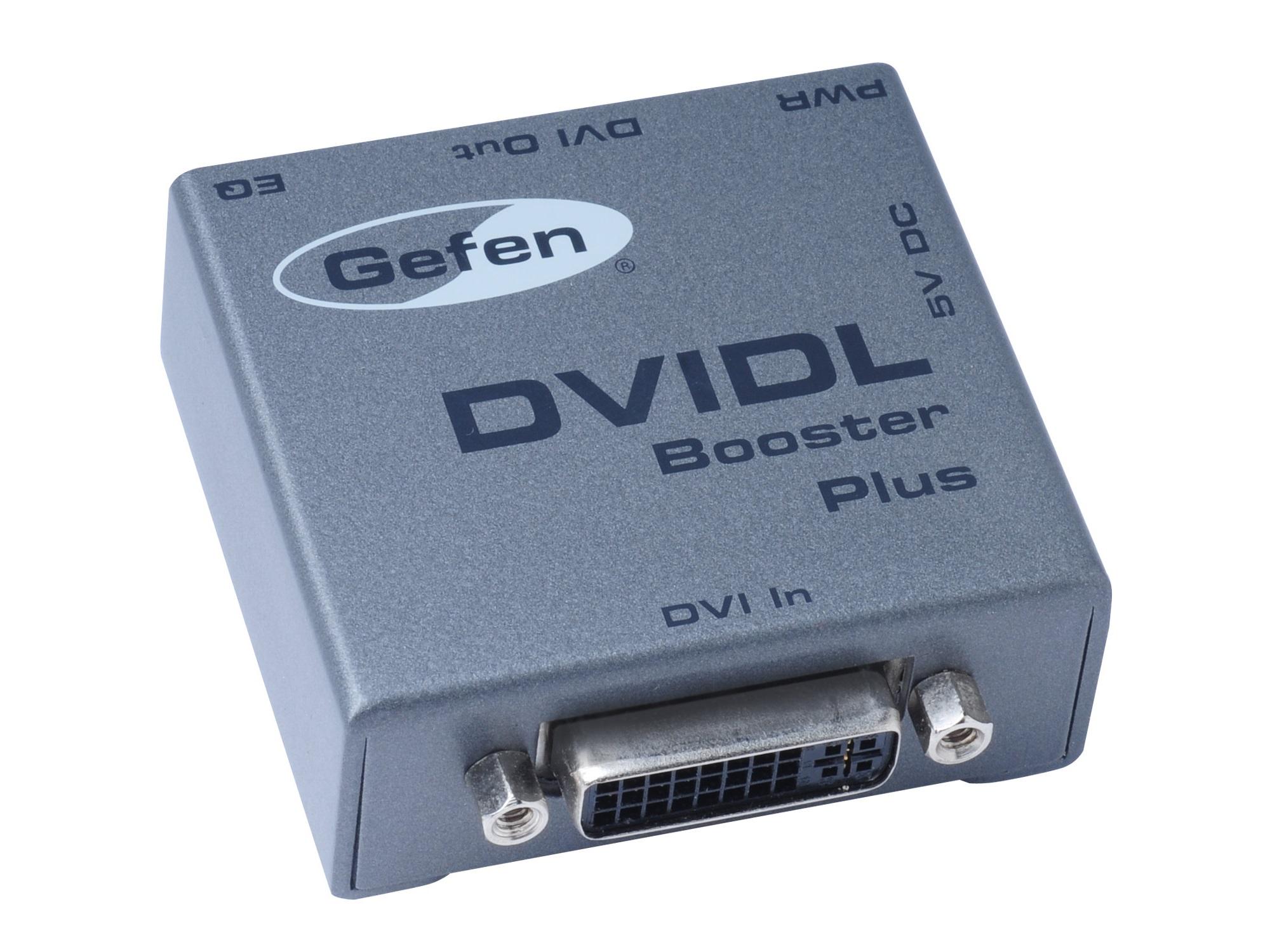
A DVI distribution amplifier transmits uncompressed digital video from one DVI source to multiple displays. Although DVI has been largely replaced by HDMI and DisplayPort in new installations, it remains widely deployed in commercial environments, industrial controls, medical imaging, and legacy AV systems where the existing source equipment and displays continue to operate without need for replacement.
Most DVI distribution amplifiers are single-link, supporting resolutions up to 1920x1200 at 60 Hz with about 3.96 Gbps of bandwidth. Dual-link doubles that to roughly 7.92 Gbps, enabling 2560x1600 and higher refresh rates. Dual-link gear is less common but essential when feeding high-end workstations, medical imaging displays, or specialized professional monitors. Match the link type of the amplifier to the link type used by your source and displays. Using single-link gear with dual-link sources will silently drop higher resolutions to the single-link maximum.
DVI distribution amplifiers typically come in 1x2, 1x4, 1x8, or larger configurations. Built-in EDID management ensures clean handshakes when connected displays have different capabilities. Amplifiers can be cascaded for larger installations: the output of one DA feeds the input of another, fanning out to many displays without picture degradation. Verify EDID and link-type consistency across the chain.
DVI carries video only, with no embedded audio. If you also need to distribute audio along with video, run a parallel audio cable (SPDIF, balanced/unbalanced analog) or use an HDMI-based distribution system instead. Some DVI-to-HDMI converters can re-embed audio on the output side if you need to migrate to HDMI displays.
DVI distribution amplifiers are still actively deployed in medical imaging (where regulatory certification of displays makes replacement impractical), industrial controls and SCADA systems, broadcast OB vans and TV studios with existing infrastructure, security operation centers, KVM rooms, and corporate AV systems with large installed bases of DVI projectors and monitors.
Yes, in significant volume. While new installations have largely standardized on HDMI, DisplayPort, and HDBaseT, the installed base of DVI equipment is enormous. Hospitals, factories, broadcast trucks, control rooms, and many corporate buildings have DVI infrastructure that works well and is not being replaced for the sake of interface modernization. DVI remains particularly common in medical imaging (where displays carry regulatory certifications that don't transfer to replacement units), industrial environments with long-life equipment, and KVM rooms where reliability and signal integrity matter more than the newest specification.
Single-link DVI provides about 3.96 Gbps of bandwidth, enough for 1920x1200 at 60 Hz, which covers most standard HD content. Dual-link DVI doubles that to about 7.92 Gbps, supporting resolutions up to 2560x1600 and higher refresh rates. If your monitors are 2K (2560x1600) or have refresh rates above 60 Hz at high resolutions, you need dual-link gear end-to-end (source, cables, distribution amplifier, displays). Using single-link equipment anywhere in the chain will silently fall back to a lower resolution, which can be confusing because the picture works but at unexpectedly reduced quality.
No. DVI is video-only and does not embed audio in the digital stream the way HDMI does. If you need to distribute audio alongside DVI video, run a parallel audio cable (SPDIF for digital, balanced or unbalanced analog for stereo) and route it through a matching audio distribution amplifier. Alternatively, use HDMI-based distribution from the start if your endpoints support it. Some DVI-to-HDMI converters can re-embed external audio on the output side if you need to migrate to HDMI displays in the future.
EDID management prevents resolution mismatches when displays have different native capabilities. When a source reads EDID from multiple displays through a splitter, it may default to the lowest common resolution to avoid sending an unsupported signal to any one of them. So a high-resolution source feeding three 1920x1200 monitors and one 1280x1024 monitor through a splitter without EDID management may output 1280x1024 to all four. A distribution amplifier with EDID management can present a fixed, preferred EDID to the source, so the source always outputs the optimal resolution and downstream displays handle scaling individually if needed.
Yes, with the help of DVI extenders. Native DVI cable is reliable to about 5 meters at high resolution before signal degradation becomes visible. Beyond that, use a DVI extender that converts the signal for transport over CAT5e/6/7 (typically up to 50 to 100 meters depending on resolution) or fiber (much longer, often kilometers). A common architecture is one DVI distribution amplifier driving multiple extenders, with each extender placed near its target display. This combines the cloning capability of the DA with the long-distance capability of the extenders.
Medical imaging is the largest single segment: hospitals and clinics often have radiology and diagnostic displays with strict regulatory certifications that make replacement impractical, so DVI infrastructure remains in service for years. Industrial controls and SCADA systems are another major use, particularly in plants where equipment has long replacement cycles. Broadcast OB vans, TV studios, security operation centers, KVM rooms, and corporate AV systems with large installed bases of DVI projectors and monitors also continue to deploy DVI distribution amplifiers to keep existing equipment in service.

On order over $300 and more for US and US territory

We Offer a 30-Day Money Back Guarantee

Full manufacturer's warranty and quality assurance

Safe checkout with trusted payment providers