




Start typing to see results...
Find the perfect solution
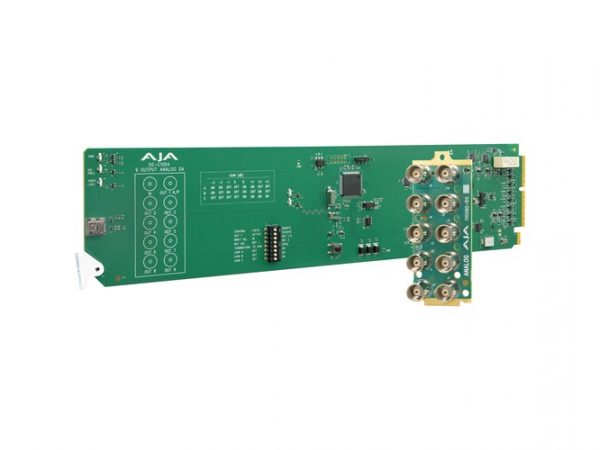
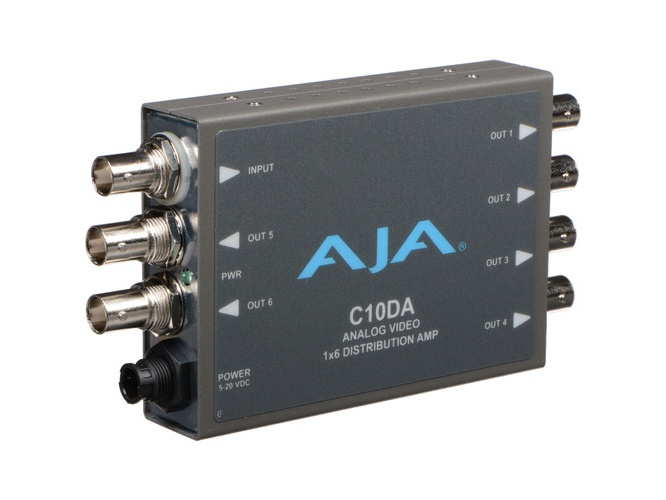
A composite video distribution amplifier routes a single composite video signal (the standard yellow-RCA video line carrying Y, color, and sync combined on one wire) to multiple displays. Composite is the simplest mainstream analog video format, with all signal components on one cable, and despite digital video having largely replaced it, composite remains in regular use in security cameras, retro gaming, hospitality TV systems, broadcast monitoring, and any installation with existing composite sources.
Composite video resolution is limited to about 720x480 in NTSC or 720x576 in PAL, which is what was once called standard definition (SD) television. Composite is the lowest-resolution analog video format still in regular use, but it is also the most universally supported. Nearly every video display ever made has a composite input.
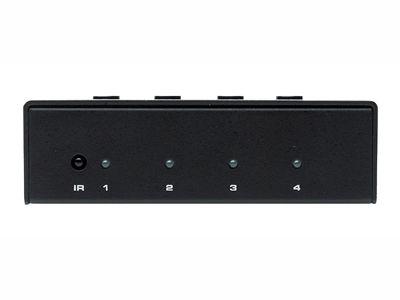
Most composite distribution amplifiers accept input on RCA (consumer) or BNC (professional) and distribute to several outputs of the same type. Form factors range from compact 1x2 desktop units to 1x32 rack-mount chassis. Cascadable designs support effectively unlimited fan-out. Audio is typically handled by paired stereo RCA channels alongside each video port, keeping the classic AV bundle intact through the splitter.
Composite is electrically robust and far more tolerant of long runs than the more complex analog formats like component or VGA. Quality 75-ohm coaxial cable can carry composite the full length of a building (100 meters or 330 feet or more) with no active extension needed. This is why composite remains so common in security CCTV installations, where cameras may be hundreds of feet from the monitor wall.
Composite distribution amplifiers are available in all three analog TV standards: NTSC (North America, Japan, parts of South America), PAL (Europe, Australia, much of Asia, Africa, South America), and SECAM (France, parts of Eastern Europe and Africa). The standard must match end-to-end: sources, distribution amplifiers, and displays must all speak the same one.
Composite distribution amplifiers are most commonly deployed in security and CCTV (analog cameras to monitor walls), retro gaming installations (preserving the look of original consoles), hospitality TV (bars and hotels with legacy infrastructure), broadcast monitoring (confidence monitoring for SD program feeds), and training rooms with older video equipment.
Composite video is the simplest analog video format: a single signal carrying brightness, color, and sync on one cable (yellow RCA on consumer gear, BNC on pro gear). Resolution is limited to about 720x480 in NTSC or 720x576 in PAL, what was once called standard definition television. It is the oldest video format still in regular use and the most universally supported: nearly every video display ever made has a composite input, which is why composite distribution remains relevant for many legacy and security applications.
Yes, in significant volume across several specific applications. Analog security cameras almost universally use composite over coaxial cable, often distributed to multiple monitor screens in a guard station. Retro gaming installations use composite to preserve the look of original consoles on period-appropriate CRT displays. Hospitality and bar TV systems often still have composite distribution running alongside newer HD feeds for backwards compatibility. Broadcast monitoring chains for SD program feeds also continue to use composite where IP or SDI migration has not been completed.
100 meters (330 feet) or more on quality 75-ohm coaxial cable. Composite is electrically robust and far more tolerant of long runs than the more complex analog formats like component or VGA. Quality 75-ohm coax (RG-59 or RG-6) can carry composite the full length of a typical commercial building with no active extension. This is one reason composite remains so common in security CCTV installations, where cameras may be hundreds of feet from the monitor wall and pulling new fiber or IP infrastructure is impractical.
The video path does not. Composite video is on its own RCA jack (yellow, by convention), and the matching audio is on separate red and white RCA jacks, just as in classic consumer video gear. Most composite distribution amplifiers therefore include paired stereo audio inputs and outputs alongside each video port, so the AV bundle stays together through the splitter. Some pro-grade units offer balanced audio on terminal blocks for longer audio runs, but consumer RCA is the most common.
Match the broadcast standard used in the country or region where the equipment lives. NTSC is used in North America, Japan, the Philippines, and a few other regions. PAL is the standard in most of Europe, Australia, much of Asia, Africa, and South America. SECAM remains in use in France and parts of Eastern Europe and Africa. The standard must match end-to-end: sources, distribution amplifiers, and displays must all speak the same one. Many modern displays auto-detect NTSC or PAL, but always verify before deploying, especially in multi-region installations.
Security and CCTV, retro gaming, hospitality TV, training rooms, and broadcast monitoring are the most common environments. Most installations today fall into two camps. First, analog security systems that have not migrated to IP cameras and still need composite distributed to multiple monitor walls, often with cable runs of hundreds of feet. Second, legacy environments (bars, hotels, training centers, retro arcades, museum interactives) where composite remains the lingua franca because the existing source and display equipment uses it.

On order over $300 and more for US and US territory

We Offer a 30-Day Money Back Guarantee

Full manufacturer's warranty and quality assurance

Safe checkout with trusted payment providers